The Russian Central Bank has announced that the value of Russia’s gold holdings has surpassed US$200 billion for the first time, while bullion’s share in the country’s international reserves increased to 32.9%.
Russia increased the value of its gold holdings by almost 4% last month, breaking the record set in the previous September. In the reverse direction, Russian reserves of the US Dollar and Euro are at historic lows. Central banks often turn to gold when there are predictions of currency turbulence ahead.
The dollar value of the reserves reached US$207.7 billion as of November 1. The gold price rose by about 4% in October after reaching a record high of US$2,800 per ounce during the month. Gold prices have been fluctuating lately amid rising geopolitical tensions.
The Central Bank also said the country’s international reserves stood at US$631.6 billion as of November 1.
Nearly half of Russia’s international sovereign reserves held in Western financial institutions were frozen in the West in early 2022 as part of Ukraine-related sanctions. The Bank of Russia has not provided a detailed breakdown of what was immobilized. However, it is known that the portion of Russia’s reserves that was not frozen consists of gold and foreign currency held mostly within the European Union, as well as holdings of Chinese RMB Yuan. The interest earned on these holdings has been passed to Ukrainian President Zelensky, who has also asked for the full frozen amount to be transferred to Ukraine.
However, Russia also holds significant European reserves in Russia, estimated to be worth a similar amount. Should the EU take Russian funds in Europe, Moscow would possibly react in kind.
Elvira Nabiullina , the Governor of the Bank of Russia, has said that Russia’s financial stability would not be affected if the West seizes its assets. The Bank has been diversifying its forex reserves for several years and is currently conducting operations with reserves that are not affected by sanctions.
Russia has the world’s fifth-largest gold reserves after the United States, Germany, Italy and France. However, it is also the world’s third-largest producer and is adding gold bullion at a rate of about 310 tonnes per annum. At that rate, Russia will hold the world’s second-largest reserves by 2030.
Overall tourism numbers to Russia have tripled from the beginning of 2024, according to Russia’s Federal Security Service (FSB). There were 13 million trips by foreign nationals to Russia from January to September 2024, up 11% from the same period last year, according to data from the FSB border service.
The data also shows a growing demand from Chinese tourists, who made 731,800 trips from January to September – almost seven times more than in the same period last year, when 105,800 trips were made. Although Chinese demand for trips to Russia is growing, it is still recovering to the pre-pandemic levels of 2019, when 1.2 million Chinese tourists visited Russia in the same seven-month period.
Chinese tourists have been attracted as part of organised tourist groups utilising the Russia-China visa-free agreement, which sees Chinese nationals obtain a visa on arrival without the need to pre-apply. Chinese nationals now account for 65% of all tourist arrivals to Russia. The launch of online visa services has also helped overall tourist visits increase.
Russia’s tourism industry has shifted focus to Asia, as the West has imposed sanctions on Russia, and banned its aircraft from their airspace and closed ports to Russia. As a result, the country’s tourist industry has switched its focus to Asia and the Middle East.
There is now growing demand to visit Russia from other destinations such as Iran, Türkiye, the UAE, and India. Russia also saw a nearly twelvefold surge in tourists from Saudi Arabia, with 39,100 arrivals in the first nine months of the year compared to just 3,300 in the same period last year.
The Kaliningrad Amber Combine (KAC), which operates a chain of Amber-specific jewelry stores in Russia, has opened an outlet in Shenzhen, China, and is looking at the same in Hong Kong. The company will operate under a franchise agreement with the Chinese company “Shenzhen Hudafu Jewelry”.
The store, which has an area of 115 square meters and a Kaliningrad Amber Combine sign in both Russian and Chinese, is located in Shenzhen’s amber trade center, which hosts dozens of stores selling amber. As part of the franchise, KAC has supplied 1,000 finished items made of amber to China, according to the company’s press release. The company is the only Amber producer carrying out both the industrial extraction of raw amber and the subsequent production of amber jewelry.
Kaliningrad Amber Combine CEO Mikhail Zatsepin said “The Amber Combine currently produces around 150,000 items a year. Its collection is updated at least twice a year. In opening our store in China, we aim for long-term cooperation.”
Liu Shaojie, the sales director of Shenzhen Hudafu Jewelry said that “China loves amber. Our country is the world’s main consumer of this gem.”
Negotiations between the Russian side and its Chinese partners on distributing finished amber items took place during the Expo 2023 exhibition in Shanghai in November last year. An agreement on licensing and distribution was made, which launched the creation of the Amber Combine’s franchise retail network. Outlets will subsequently be opened in Beijing, Shanghai, and Guangzhou, and is negotiating the launch of trading sites in Hong Kong and Azerbaijan. In Russia, KAC operates nine stores in the Kaliningrad region, Moscow and St. Petersburg.
As much as 95% of the world’s amber reserves are located in Yantarny, on the coast of the Kaliningrad region. Kaliningrad Amber Combine produced 627 tonnes of amber in 2024.
The Centre for Breeding and Primary Seed Production department of Russia’s EkoNiva Group has signed an MoU with Chile’s Agricultural Research Institute (INIA). It aims to help introduce accelerated breeding methods and develop the exchange of experience between the two countries’ main plant breeders. It plans to cut the time needed to create new agricultural plant varieties by two to three years. It typically takes 10-12 years to develop a new variety in a traditional cycle.
EkoNiva’s directors visited INIA and the Chilean breeding and seed production facilities at the beginning of this year with the aim of introducing tools that accelerate the breeding process. This involves organizing the replication of EkoNiva’s breeding lines in the winter nurseries in the southern hemisphere.
EkoNiva will be able to harvest a second crop in Chile during the Russian winter after cultivating the breeding lines during the Russian summer. The focus will be on producing seeds for soybeans, chickpeas, and lentils.
Vitaly Voloshchenko, a director of EkoNiva said “In this way, cooperation with our Chilean partners allows EkoNiva to significantly speed up the reproduction of seeds, by two to three years, without any loss in the quality of the genetic material. This will cut the time needed for certain stages of the breeding processes, and therefore the time needed to introduce new Russian varieties to the market.”
When asked how this innovation could affect the cost of creating new varieties, Voloshchenko said that this is the company’s first experience using winter nurseries, so the economic impact still needs to be calculated. “However, to enhance competitiveness, the time-to-market for a new product (a variety) often matters more than an increase in the project’s cost, especially in the context of import substitution.”
The agreement also provides for exchanging scientific information, expertise in genetic resource adaptation, and sharing collection materials belonging to both sides to support breeding programs and preserve and utilize various plant varieties in Russia and Chile.
Alfaro Jara, the INIA Deputy Director for Research and Development said “Both Chile and Russia are concerned about food security, so it’s essential to create a genetic resource bank and develop breeding. Under the memorandum, we plan to jointly develop breeding programs, offer specialized training in genetic advancements, exchange genetic material, and conduct work in off-season nurseries. In northern Chile, in the city of Arica – an incredible place known as the city of eternal spring – there is a breeding station where any crop can be cultivated, with up to three harvests a year.”
EkoNiva and INIA are currently discussing the details of their cooperation and its legal framework. The company is a leading producer and processor of raw milk in Russia and is also involved in breeding and seed production.
The Central Bank of Russia’s (CBR) forecast for Russian GDP growth during 2024 is 3.5% – 4%, however, the final estimate for economic growth this year could exceed 4%, according to Kirill Tremasov, an advisor to the CBR governor.
Tremasov, speaking at the Russian Economic Forum in Chelyabinsk, stated that “In 2023, Russia’s GDP growth amounted to 3.6%. Rosstat usually reviews the figures at the end of the year. I think that at the end of 2024, we’ll get an estimate for last year of upwards of 4%. This year our growth rates are also tracking at 3.5% – 4%. After all the peer reviews, I wouldn’t be surprised if it will also be upwards of 4%. There have been two years of very high growth rates for the Russian economy.”
He also said “With this picture taking shape, which is leading to an acceleration of inflation, we are forced to raise the key lending rate, in order to stop an overheating of the economy and return to a balanced growth trajectory. Such a growth trajectory, by our estimates, is 1.5% – 2.5% per year. Next year we expect a slowdown.”
Tremasov also said “The Russian economy has deviated from its equilibrium trajectory during 2024, and hit the production capability ceiling. It’s impossible to grow further at such rates, simply because we face a labor shortage and are already at 100% production capacity utilization.”
These comments suggest that Russia needs to expand its production capabilities and infrastructure – issues that we have been following over the course of the year. This however takes time, the building takes time, new machinery needs to be installed, and Russia still needs to solve its labor shortage issue.
Tremasov said “Russia could grow this quickly (4%) when capacity was available and there were available labor resources. Now these are in short supply, therefore growth will naturally slow. These are normal processes. The Central Bank forecasts Russian GDP growth of 0.5% – 1.5% for 2025, 1% – 2% for 2026, and an arrival at a balanced growth trajectory of about 2.5% in 2027. We see that the Russian economy can smoothly move along these predictions.”
In comparison, the World Bank has forecast the following GDP Growth Rates for other major economies as follows:
Two new shipping lines are to open between Russia and Egypt for the transportation of refrigerated containers. Egypt’s Global Logistics, an agent of the Cairo forwarder Fox Shipping, will become the operator of two marine container lines: El Dekheila – Novorossiysk and El Dekheila – St. Petersburg. El Edkhelia is the main port of Alexandria on the Mediterranean coast.
Vessels designed to carry up to 350 refrigerated containers will be used on these routes, which are planned to operate twice-weekly services. Due to these new supply chains, the total supply of Egyptian food to the Russian market may increase by 700 containers per week. Like Russia, Egypt is full member of the BRICS group.
JSC TVEL, the management company of Rosatom’s nuclear fuel division, has signed a memorandum of cooperation with South Africa’s AllWeld Nuclear. The companies plan to work together in the decommissioning and management of radioactive waste in South Africa. The country has two nuclear power reactors, both located at the Koeberg Nuclear Power Station. The reactors were built by France’s Framatome, but are operated by Eskom, South Africa’s state-owned nuclear power company.
A Rosatom press release stated that “The key aspects of cooperation will be the development of infrastructure for radioactive waste management, including processing, storage, and disposal, as well as the design and manufacture of components for equipment needed to handle tasks in this area in South Africa.”
Rosatom does not currently have nuclear power projects in South Africa, but it has been reported that the company is exploring a floating nuclear power plant project with the country.
South African Energy Minister Kgosientso Ramokgopa said in September that the country intends to strengthen cooperation with Russia in nuclear technology. The countries already cooperate on nuclear energy, including the development of technology and small modular reactors. Ramokgopa said, “A platform for cooperation with Russia already exists and South Africa wants to develop it in the future since we only have the one nuclear plant site.”
Nuclear power currently provides just 5% of South Africa’s electricity needs. Like Russia, South Africa is a member of BRICS.
With Donald Trump about to become the 47th President of the United States, we look at the various issues his presidency is likely to impact Russia, including Ukraine, sanctions, security, tariffs, trade, and BRICS. In Part Three, we look at the implications for the United States’ likely attitude towards BRICS. Part One, which dealt with conflict resolution, can be accessed here and Part Two, which covered sanctions, tariffs, nuclear weapons security, and trade, can be accessed here.
Trump and BRICS
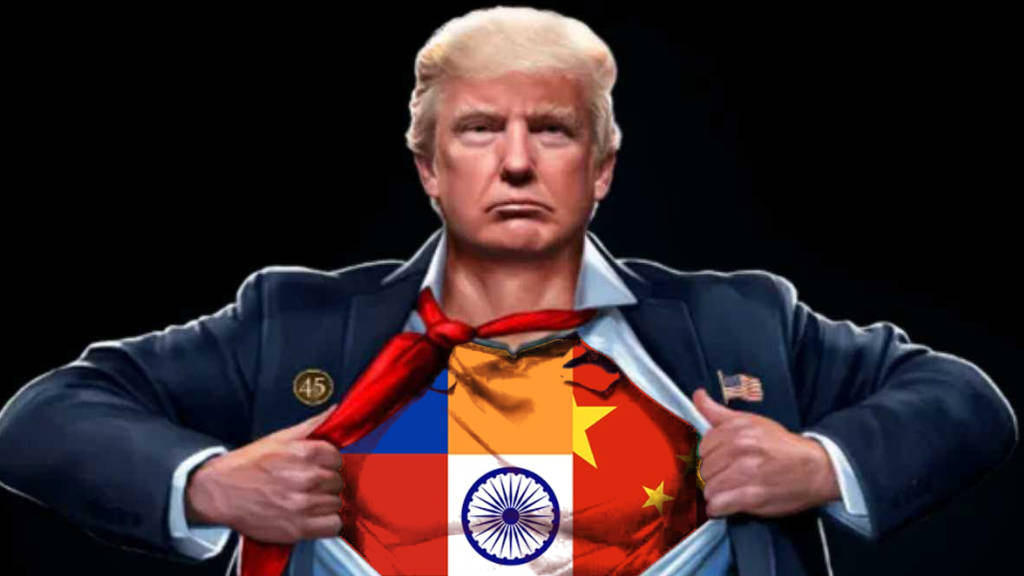
On the face of it, Donald Trump is not a fan of BRICS. This is mainly due to two reasons, firstly an overstated US position that somehow the group is anti-American, and secondly, that the BRICS group is ushering in de-dollarisation, which is correct. In response, Trump has previously said that he will sanction ‘any country’ that attempts to use non-US dollar alternatives. So where does this leave the BRICS?
Understanding BRICS Today
The BRICS as is, currently includes members Brazil, Russia, India, China, and South Africa, while Egypt, Ethiopia, Iran, and the UAE all joined from January this year. Saudi Arabia has not yet ratified its proposed membership, yet takes part in BRICS events, Riyadh will probably want to see the outcome of the Middle East crisis before sitting down at a membership table that also includes Iran.
In addition to these countries, at last month’s 2024 BRICS Heads of State summit, a further 13 countries were admitted as “BRICS Partners” – pending full membership, which is expected to be individually processed during 2025. These include Algeria, Belarus, Bolivia, Cuba, Indonesia, Kazakhstan, Malaysia, Nigeria, Thailand, Turkiye, Uganda, Uzbekistan, and Vietnam.
These potential new ‘BRICS Partners’ would change the overall BRICS dynamics in terms of global influence. Should the 13 BRICS Partners all join as full members, this expanded BRICS would account for just under 43% of global GDP, compared with the G7’s 30%. In population terms, the new BRICS would account for about 57% of the total global population, as opposed to 10% for the G7.
In terms of simple demographics, the emergence of what may become the world’s largest multilateral organisation will start to make multiple countries think about the developing, new geopolitical dynamics and the implications. This includes the United States.
In terms of BRICS policy, it is not, as has been described by NATO, a military threat. The BRICS is a trade group, open to all – except countries that engage in the issuing of sanctions against its members. Collectively, as can be seen in the 2024 BRICS Kazan Declaration the BRICS also calls for reform within the United Nations, which may not fit in with US objectives, although Trump is not a great fan of the UN either. The BRICS also categorically state that they will resist “Western hegemony” and will actively seek alternatives to the US dollar. Neither of those objectives will fit with Trump.
United States-BRICS Trade
The trade turnover between the United States and the BRICS nations at about US$850 billion in 2023, although roughly 2/3 of that was with China. If we add the new BRICS Partners into the equation, this figure would rise to about US$1.26 trillion.
This is a significantly large – and diverse trade figure – to dissuade Trump from doing anything immediately rash. The United States is now in a blind spot in that they are unaware of any potential BRICS trade response if blanket tariffs were to be imposed on the collective group for pursuing a de-dollarisation agenda. It could be possible, but only after a strategic reset within US trade policy influencers to fully understand the implications of a punitive action against the BRICS. They will want to avoid the self-inflicted fiscal damage the EU caused itself for example, by imposing poorly thought sanctions on Russia.
In addition, there are other influences. The new Trump administration can be expected to include Elon Musk, probably in some type of trade capacity. Musk has Tesla factories in China and wants into the India market as well. He also has his eyes on Tesla sales to emerging markets such as Brazil (which imports them from the United States) in addition to the broader Middle Eastern and Southeast Asian markets. Musk will not want to see sanctions get in the way of Tesla’s expansion. That also creates issues for Trump as Tesla is the cash cow that helps fund SpaceX – a key component of US military and communications ambitions.
This suggests that solutions may need to be found in terms of how Trump handles the BRICS. While there is no question of the United States joining, it is feasible that Trump could participate in a future BRICS annual summit as a Guest. That would accomplish two aims. First, a greater understanding of what the BRICS is – and secondly, an opportunity to be seen with World Leaders he admires. At no other event – bar the G20 – could Trump be seen with the likes of Modi, Xi, and many others (and possibly even Putin). That would be quite a coup both for him and for the BRICS group as they attempt to ward off sanctions or tariff trade winds.
But there is another solution. Trump has already stated he wants to be known as the ‘Bitcoin President’ and endorses the concept of the digital Dollar. While he may not want to see non-dollar alternative financial systems develop, he may be amenable to including the Digital Dollar as part of an alternative payment system that would also include the Chinese RMB amongst others. That would help spread the cost of the US having to develop and roll out a US digital Dollar technology alone and would spread the operational risk. While the Ruble would probably not be part of this, other currencies such as the Euro, Indian Rupee, Brazilian Real, and Saudi Riyal could be. That would connect the United States indirectly to BRICS, and help sustain US dollar trade with these powerful alternative economies a while longer.
The essence of Trump is that he is highly competitive, and a businessman at heart. As he said, his expertise lies in “the art of the deal”, and we suspect he may come up with some original solutions to allow the US to trade with BRICS without having to confront it.
With Donald Trump about to become the 47th President of the United States, we look at the various issues his presidency is likely to impact Russia, including Ukraine, sanctions, security, tariffs, trade, and BRICS. In Part Two, we look at sanctions, tariffs, nuclear weapons security, technology, and trade. Part One, which dealt with conflict resolution, can be accessed here.
Part Two – Sanctions, Tariffs, Security, Technology and Bilateral Trade
Sanctions
During Trump’s first Presidency (2017-2021) as Russian President Putin has wryly noted, Trump placed Russia under more sanctions than any previous President had. Although that record has now been overtaken by the now-outgoing President Joe Biden, Trump is fully aware of the benefits of using sanctions to gain a trade advantage and will likely not hesitate to do so again. He also has a very strong negotiating hand to use when negotiating with Putin. To reduce sanctions on Russia, Trump will want something in return. We suspect that in contrast to Trump’s previous time in office, where he appeared more deferential towards Putin, this time around he will be more bullish. That said, he is more than capable of ordering a review of US sanctions upon Russia, and it may well make sense to do this, especially if a settlement can be reached with Putin as concerns Ukraine. If a deal is done, some sanctions currently in place may subsequently be regarded as obsolete and obstructive. But generally, we do not see Trump as being willing to give up what he sees as a strong hand against Russia without getting something significant in return. That could be linked to a nuclear arms deal, for example, with Trump less hawkish than Biden when it comes to threats to use weapons of mass destruction or bigging up perceived threats from Moscow. Verdict: Not much change.
Tariffs
There are two sides to the tariffs issue: firstly, US-Russia bilateral trade is minimal anyway, at about US$4 billion for 2024, of which about 80% are Russian imports, effectively reduced to products that the United States cherry-picks. In addition to this, sanctions have replaced tariffs as a punitive trade weapon without the need to refer to the WTO, which has been effectively rendered obsolete. Their deployment then as a weapon against Russian imports is unlikely, there is no need. But where they could be imposed is on a collective group, such as the BRICS. That is a more serious matter and an issue we will discuss in Part 3 of this series.
Nuclear Weapons Security
Trump is highly aware of the dangers of nuclear weapons and will want to walk down from the more belligerent stance of his predecessor. The United States and Russia have not yet renewed their new START treaty for implementing a reduction of strategic offensive arms, and Trump is likely to see this as a negotiating tool to extract concessions from Putin. Both sides will want to accomplish something here and for both, it is also a domestic political win. It will be interesting to see what is traded between them for the ability to reach a new nuclear weapons limitations agreement.
Technology
For this, read global financial systems. Trump has already said that he will become ‘The Bitcoin President’ implying that he wants to liberalise the cryptocurrency market and unleash the US dollar in digital format. The United States, whose dominant position of the US dollar in global markets, is actually quite some way behind Russia and China in the introduction of its Digital Currency. A smooth roll-out is imperative, yet hindered by the fact that many countries using the Dollar are not yet sufficiently advanced to be able to reliably use a digital version. The United States’ embracing of a technology that already exists is therefore hampered by having to move at the pace of the slowest participant. China and Russia especially, are keen to introduce their respective digital currencies to assist with boosting bilateral trade and moving around Russia’s suspension from the SWIFT financial settlements system. Russia has instructed its banks to offer digital Ruble services to their clients by the 1st of July next year.
Here, Trump’s currency digitisation plans and those of Russia and China appear aligned. But there is a problem. Trump is also strongly anti-de-dollarisation and has already threatened to impose sanctions on any country that tries to bypass US dollar use in international trade. That extends to alternative financial messaging systems, such as the proposed BRICS Pay and the mBridge service, which the Bank of International Settlements last week refused to service. It is hard to say how Trump might enact his threats, which would have to be aimed more at China than Russia, as the latter is already up to its neck in punitive financial actions against it. How to target China and show displeasure without simultaneously damaging the US economy?
Solving this conundrum and ushering in a new global system of financial settlements – or not – will be a key feature of Trump’s Presidency, and especially its impact upon non-US dollar trade, the increasing volumes of which Trump wishes to reverse.
Bilateral Trade
The current level of bilateral trade is about US$4 billion, with about 80% of this Russian exports. This is very small beer for both countries – Russia trades more with Serbia than it does the United States. There is no real need to change this status quo, both economies are essentially divorced from each other with both finding alternative supply chains elsewhere, either domestically or globally. Neither possesses any critical raw materials that the other cannot obtain. Much is made of superior US technologies, however, while certain components such as microprocessors and AI may be more advanced in the United States, Russia remains within touching distance. It is also arguable given the Ukraine conflict that certain Russian precision technologies are superior to those of the United States military. Both sides will probably prefer to maintain the current status quo until a future series of events brings the two sides closer together when mutual needs overcome trade antipathy.
Part Three of “What A Trump Presidency Will Mean For Russia” will cover the impact on US-BRICS relations. To make sure you can access it and obtain the full US-Russia picture, take a complimentary subscription and sign up for our weekly round-up here. or follow us on X (Twitter) here.
Certain sections of the Western media have depicted Donald Trump as being pro-Russia. The reality is rather more complex – although delivering peace does seem an option. But at what price?
Part One – Conflict Resolution
With Donald Trump about to become the 47th President of the United States, we look at the various issues his Presidency is likely to impact upon Russia, from Ukraine, Sanctions, Security, Tariffs, Trade and BRICS. In this Part One, we look at conflict resolution.
Hold Your Breath
Trump will not actually move into the White House until January 20th, in a strange quirk of the US political system, there is a ten-week waiting time for new Presidents to be inaugurated. However, Trump appears eager to act and with a now lame-duck, ineffectual US administration in place – both President Biden and Vice-President Harris remain in office – real change may not be possible until the New Year. The out-going Biden administration therefore still have time to put in place regulatory issues designed to continue their policies, even after a Trump administration is sworn in. This has potential impact on many issues, however key amongst them is providing finance for Ukraine. Biden has already stated he intends to “Trump-proof” US military expenditure to Kiev, and if he retains enough support to push that through, it may impact upon Trumps intent to find a resolution.
Ukraine
Trump has stated he will stop the Russia-Ukraine conflict, the real issue is how, if at all, the Biden administration makes it difficult for Trump to cut off the financial flow. That might take some legal wrangling, but Trump is in a strong position now, Trump and the Republicans have also won control of the US Senate and are highly influential in the US Supreme Court. Whatever obstacles the Democrats could have put in his way can be expected to be overturned – in time. The issue becomes a battle of wills between the vested interests in financing the war and the vested interests in bringing it to an end. US finance appears to be the key here. Trump can probably get this done in short order. What will be more difficult to accomplish is pacifying the UK and EU, whose politicians and populations have been told that Russia is an imminent threat.
Security Finance
While it appears the EU is also becoming tired of the conflict, it will be reluctant to agree to any cessation unless it has military guarantees in place, and these will need to come from the United States. That is difficult as Trump has already expressed immense dissatisfaction with the US financing of NATO. Trump will be looking at that with intense detail. With the EU also in fiscal dire straits, the security aspect for the bloc looks problematic. The choice is to develop an independent, EU military – which brings back reminders of WWI and WWII when this disparate group of countries previously went through a mass militarisation campaign. EU financiers will be looking at the least expensive option – the easiest route leads back to NATO. But for that, Trump will exact a cost, meaning that European military and security budgets are almost certain to rise as a percentage of GDP. To give an example, the US spends 3.9% of its GDP on its military, the EU 1.2%. Trump will want to see the EU match US expenditure levels. Either way, EU taxpayers will have to foot the bill in a political move that sees the pro-conflict EU politicians get off the hook.
Settlement
Trumphas labelled the Ukrainian President Zelensky a ‘great salesman’ in reference to the billions of dollars he extracted from Washington. But what isn’t known are his negotiating skills, beyond the ability to be somewhat blunt and aggressive. That strategy won’t work with Putin. It also seems that without additional, significant financing, Russian troops are now making substantial territorial gains in East Ukraine. If Trump is able to stop the financing, it leaves Zelensky with very few cards to play. The only bargaining chips he currently retains to stop the fighting that may at least leave Ukraine with some territory, are agreements with Russia the country will not join NATO (Trump wouldn’t want the Ukrainian expense anyway), would not house NATO hardware, and will adopt neutrality into its constitution.
Putin might be more territorially amenable if such terms are agreed. On the other hand, Putin could go all in, remove the current government and bring the entire country back into the Russian orbit. As regards Ukraine joining the EU, assuming it retained some sovereignty, Putin wouldn’t object. He is well aware the country has long been in fiscal dire straits and would be more than happy to see the European Union spend its money to sort it out. Another burden for EU taxpayers. But at least their corporates may be able to extract some profits from absorbing Ukrainian key industrial and productivity assets, and from any reconstruction build. If not, Russia will provide the impetus.
The Middle East
This will prove a tough conflict to solve. It was telling that Benjamin Netanyahu, the Israeli Prime Minister, sent Trump a telegram congratulating him on his 2024 election victory even before Trump had acquired the majority of seats. Israel has been violently successful in rooting out both Hamas in Palestine and Hezbollah in the Lebanon, although the question of what happens next remains problematic – the next logical target would be Iran, but that is a totally different level of escalation. There are also humanitarian concerns – what to do with the millions of people now displaced in Gaza and Beirut, although Israel doesn’t appear to have shown any commitment to this. Perhaps Netanyahu feels the US or UN can pick up the bill.
Israel, against Russian wishes, as Moscow has advocated a two-state solution, will also want to keep Gaza and effectively annex it. Gaza, while now obliterated, is primary Mediterranean coastal real estate. That is a project that Trump can understand, and it will be interesting to see how he can manipulate US interests to become involved. The downside here – and it is a significant one – is how the rest of the Arab world feel about the Palestinians. They represent a Muslim bulkhead against a Zionist state. That will also come down to money, eventually, but does not bode well for any future for Palestine. We suspect that the remnants of the Palestinian population will be resettled in the United States and the Middle East with incentives given for instigating this. The key issue here is the real brotherly love fellow Muslims feel for the Palestinians. They have long been among the poorest in the region, and have always required fiscal support. With this area of the Middle East having changed hands so many times dating way back beyond the Biblical and Koranic eras, the contemporary Palestinians may ultimately be seen as a regional anachronism, whose fate has been to suffer a destruction similar to that of the Cush, Puts, and Meshesh, amongst many others. It is sad, however this appears to be the likely outcome. The Middle East will then be free to develop as it was in the pre-Palestinian conflict days and can concentrate instead on resolving other regional conflicts in Ethiopia, Sudan, Syria, and Yemen.
For Moscow, this scenario represents a small loss, most notably as it has stood up for the rights of Palestine and the Palestinians. If they are absorbed into the wider regional community then Moscow loses some regional influence. Russia will also be concerned about any US military presence in the region, with an eye on any potential future mischief being created throughout the region. Several countries which Russia has a vested interest in, such as Libya, Syria and Iraq remain vulnerable to US pressure.
Meanwhile, Russian shipping companies have already begun developing new shipping routes to Israel’s Port Haifa, possibly in response to a perceived regional peace on Tel Aviv’s immediate terms.
Part Two of “What A Trump Presidency Will Mean For Russia” will cover the impact on US-Russia sanctions, tariffs, trade and the BRICS. To make sure you can access it and obtain the full US-Russia picture, take a complimentary subscription and sign up for our weekly round up here. or follow us on X (Twitter) here.
The Russian President, Vladimir Putin has welcomed 28 new Foreign Ambassadors to Moscow and delivered a keynote speech to them collectively. The new Ambassadors are the highest diplomatic representatives of the following countries:
Europe
Genc Pecani (Albania), Alexander Rogozhnik (Belarus), Michel Gerebtzoff (Belgium), Ivan Orlic (Bosnia and Herzegovina), Jesper Var (Denmark), Marja Elina Liivala (Finland), Julian Clare (Ireland), Cecilia Piccioni (Italy), Carmelo Inguanez (Malta), Joanneke Marijke Balfoort (Netherlands), and Ricardo Martínez Vazquez (Spain).
Caucasus
Gurgen Arsenyan (Armenia), and Rahman Mustafayev (Azerbaijan).
Africa
Aristide Rapougdondba Ludovic Tapsoba (Burkina Faso), Genet Teshome Jirru (Ethiopia). See also here, Peter Mutuku Mathuki (Kenya), Issa Abdou Sidikou (Niger), and Mark Grey Marongwe (Zimbabwe).
Middle East
Simona Halperin (Israel).
Asia
Vinay Kumar (India) see also here, Akira Muto (Japan), Kubanychbek Bokontaev (Kyrgyzstan), Siphandone Oybouabouddy (Laos). See also here, Dato’ Cheong Loon Lai (Malaysia), and Thit Linn Ohn (Myanmar).
North America
Sarah Taylor (Canada).
South America
Enrique Ignacio Ferrer Vieyra (Argentina).
Oceania
Mark Julian Trainor (New Zealand).
Of these, half could be considered as part of the Global South, have expressed interest in BRICS (India is already a member), and are generally pro-Russia. The other half are mainly pro-Western, with nine of them NATO members. This is what Putin had to say:
Ukraine
“Only those who are unfamiliar with Russia’s history and fail to understand the strength of its unity can indulge in illusions about inflicting a strategic defeat on it. The hostile course taken by several Western states, aimed at escalating and prolonging the Ukrainian conflict to inflict a strategic defeat on our country, is profoundly erroneous. Russia values the genuine desire of its BRICS partners to help resolve the Ukrainian crisis.”
Bilateral Cooperation
“Russia is open to mutually beneficial cooperation with all countries, without exception, based on the principles of equal rights, non-interference in internal affairs, and strict adherence to international law. Moscow stands for the development of a fair system of international economic relations, free from unfair competition, illegitimate unilateral sanctions, and politically motivated restrictions. Russia does not seek confrontation and hopes that Europe will adopt a rational, balanced approach to cooperation.”
Foreign Policy
“Russia’s foreign policy is based on a constructive approach that takes into account both its own interests and global trends.”
The Middle East
“Russia is making every effort to prevent the Middle East conflict from escalating into a major war.”
Armenia and Azerbaijan
“Russia is doing everything possible to normalize relations between Armenia and Azerbaijan so they can sign a peace treaty.”
Summary
With the new Israeli Ambassador in attendance, Putin made it very clear Russia wants peace in the region. Both Armenian and Azerbaijani Ambassadors were also present with Putin laying down Russia’s similar expectations for peace. The same was stressed about Ukraine, with Putin telling the eight new EU ambassadors a similar message and that Russia wanted cooperation, not conflict. Specific mention here was also made to the BRICS in the context of Ukraine, which is increasingly a theme. The recent ‘Kazan Declaration’ issued by the BRICS Heads of State also included statements concerning Ukraine (articles 36, 44 here).
In short, much of Putin’s Ambassadorial welcome was directed toward peace as a step forward in their respective bilateral relations. The message being sent back to their governments was implicitly clear: cooperation, not conflict. To what extent that message is absorbed remains to be seen by at least half of them. It will be interesting to observe what pressures the BRICS half will be able to diplomatically bring to bear upon the Western half during their Ambassadorial postings to Moscow.

 Русский