News

The US Rules Based 2024 Presidential Election Order Compared With China, Russia, and the BRICS

Published on November 5, 2024

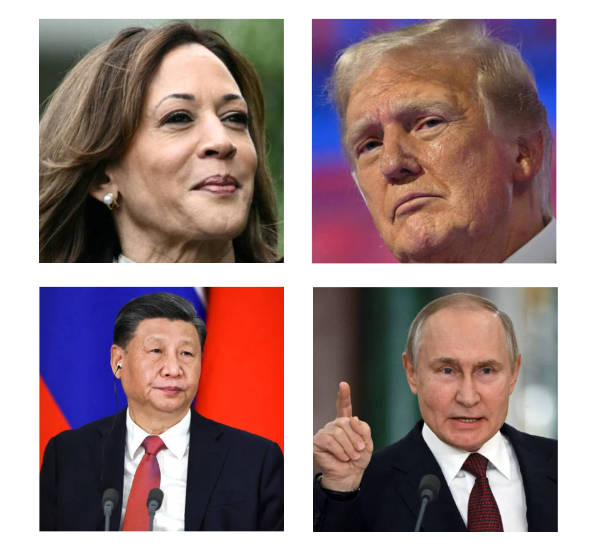
As everyone knows, the United States is currently holding its Presidential elections, with the voting population evenly split. No one seems able to make a prediction. Analysts are unable to analyse, some fearful of ‘getting it wrong’ – with political repercussions to follow – and therefore building in a closer contest in polls. National newspapers, also afraid of upsetting the winning candidate, have declined to endorse one or the other. Donald Trump has been shot at and subjected to at least one other assassination attempt. The sitting President is strongly suspected of being mentally below par, a sad sign of elderly decline. That begs the question: Who is really in charge? In this article, we examine how ‘rule of law’ and ‘democracy’ stack up in the United States as opposed to the same in Russia, China, and the BRICS.   

As concerns, the US Presidential elections, held to elect arguably the world’s most powerful individual, the Presidential and would-be Presidential language has been childish:

Biden: “The only garbage I see hanging around are Trump voters” 

Harris: Numerous ‘Word Salad’ statements such as “And understand the difference here, understand the difference here, moving forward, moving forward, understand the difference here…”

Trump: “Harris is a low IQ individual… dumb as a rock” and “Does Harris drink? Is she on drugs?”   

The quality of what now passes for normal political, even diplomatic rhetoric has markedly declined in recent years. Alexey Mozhin, the Russian representative at the International Monetary Fund, which Russia also finances, has resigned after 30 years and had recently stated when collaborating with Western nations “They are rude to me… they insult my country. It’s all deeply disgusting.” Sergey Lavrov, Russia’s Foreign Minister, has also spoken out about this trend, saying that “Neither myself nor President Putin ever uses such language.” (Readers can Google to try and find examples). Lavrov also said that the Global South “are getting fed up with such (US) behaviour”.

The rather uncalled-for rhetoric aside, the interesting question is what will happen in the United States when the voting is done and dusted. With a race this close, it is entirely plausible that there could well be violence: the White House, a fortress of Western democracy, is currently being boarded up in case there are riots. There will almost certainly be legal challenges should the result be close, with both sides launching claims and counterclaims. These could run on into January.

It is even possible that the final winner is determined not by the millions of American people, but by just the 12 individuals sitting on the US Supreme Court. Yet they too, have previously been criticized for corruption and political bias. If overwhelming public anger at the election results – including a Supreme Court decision – becomes overwhelming, there could be serious social unrest in the entire country. And this is from a nation that has been promoting a ‘Rules-based International Order’.

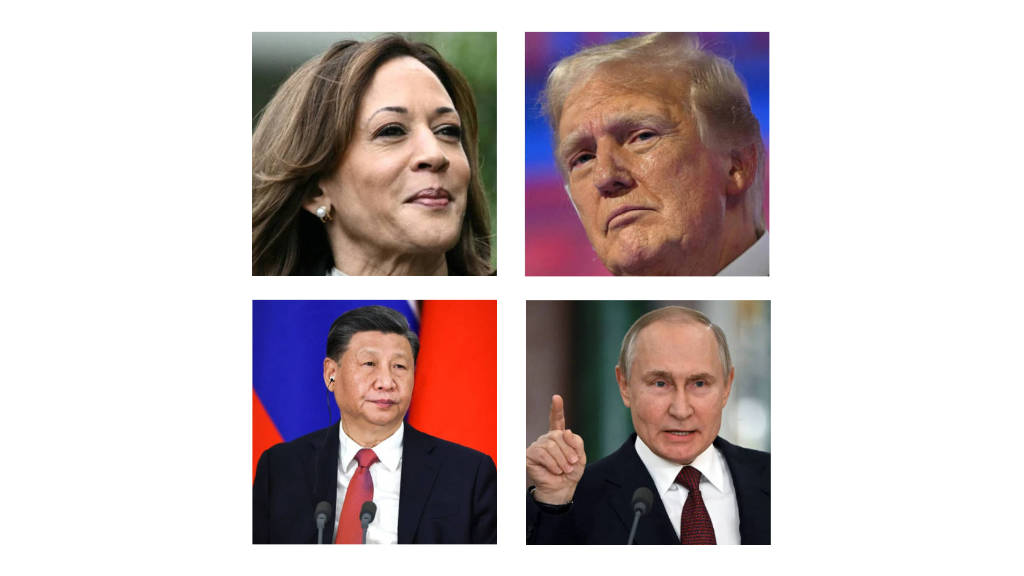
We can compare this with what the West typically refers to as ‘Autocratic’ states run by ‘Dictators’. This too is insulting. But here we can look at both China and Russia. Like the United States, both modern versions of these countries were born out of revolution. Both are democratic, a statement that may surprise some readers. Agreed, the level of democratic institutions within both may differ from the West’s definition, but growing indicators are closer than often thought. After all, who is really is running the United States at this moment? That is now more difficult to determine than either China (Xi Jinping) or Russia (Putin).

In China, there are democratic elections. These may be based within the context of just one political party, bound by certain intellectually defended beliefs, but claiming China is autocratic is incorrect. In fact, power in China flows both up, and down. Villages and towns vote for representation at the Chinese National People’s Congress (NPC), which with 2,977 members, is the largest legislative body in the world. Naturally, there are different ideological factions and differing opinions. The Chinese one-party state is an effective way to combine both Democratic and Republican elements. In the United States, these different factions have become combative rather than cooperative. 

In China, under one broad political umbrella, points related to governing the country are actively debated and sent further up the Chinese political structure and researched and further debated. Local and regional decisions are made at the executive branch level and are referred back down for implementation. Those of national importance are sent to the relevant Ministry for further analysis and debate. Eventually, the critical decisions and strategies as required are discussed by the Chinese Politburo, headed up by Xi Jinping. That is a body of 24 individuals (double that of the US Supreme Court) who make final decisions. It is a democratic process. Xi Jinping’s role is as Chairman, and he may hold the ‘reins of power’ but is still bound by the democratic processes beneath him. China is in fact, more democratic than autocratic. It is precisely to avoid splitting the country along political fault lines – as is now happening in the United States – and bearing in mind China had endured a civil war when it adopted this political structure – that it has such a democratic system, albeit with Chinese characteristics.

It is a similar situation in Russia, where having a population of 20% of China’s voting population instead extends directly to all Russian individuals in terms of appointing local, regional, and national legislative candidates, as well as the President. Russia’s political system and decision-making process evolves around the State Duma (Parliament) which has a collective 450 members. Required decisions are taken, then passed either back down the democratic structure to local and regional levels for implementation, or up the structure to Ministerial levels for further input. Eventually, the President issues a decree and signs this into law. Putin is no more an autocrat than Xi. 

The important point here is understanding what ‘democracy’ really is. It isn’t necessarily the ‘one man, one vote’ simplification, as many are excluded. The young, the infirm, the criminal, the diaspora. National demographics also differ: For every US national, China has 5 Chinese nationals. Russia is geographically double the size of the United States. China and Russia have different but similar problems in reaching out to people. China has too many, and Russia is too remote. However, they have both reached democratic solutions that suit them.  They have both embraced the democratic concept.

This is why they both – and this was very apparent at the recent BRICS Heads of State summit in Kazan – have stated that they want to see a ‘multipolar, new world order’ introduced, under the democratic institutions of the United Nations. The BRICS specifically stated that they “Expressed their support for comprehensive reform of the United Nations, including its Security Council, to make it more democratic, representative, and effective.” The document can be viewed here. (see articles 6, 8, and 21 among many other democratic references). That is a definitive commitment to both democracy and the rule of law.

This is in stark contrast to the political rhetoric coming out of the United States, where both candidates have accused each other of ‘destroying democracy’ and there is no mention, from either about the United States’ role in upholding the rules or regulations laid down in the UN Charter, which the US signed in 1945. Putin and Xi have shown they are serious about their international commitments. Neither Harris, nor Trump, have done the same.

There have been no mention of any ‘rule of law’ as concerns the US position in its foreign affairs, while meanwhile there appears to be an internal rule of law, democratic breakdown happening as well – getting gun laws repealed is just one example.

What the next few days, weeks, and even months will tell us – regardless of who wins and loses the US Presidential elections – is exactly what is meant by the United States’ perception of ‘democracy’, ‘rule of law’, what this actually means to Americans, and how serious the electorate are in both understanding and implementing it. It is becoming obvious that the United States’ democratic and rule of law systems have declined to become incapable of stability, and possibly, intellectual reason. A democratically divided nation is a dangerous state to be in.   

Further Reading

What Will Happen With Russia If Donald Trump Is Elected As US President?

Russia’s FESCO Shipping Increases Novorossiysk-India Ports TEU Volumes By 57 Times In 2024 

Published on November 5, 2024

Russia’s FESCO (Far Eastern Shipping Company) Transport Group shipped over 11,500 TEU between the ports of India and Novorossiysk in the first nine months of 2024 as part of its Indian Line West Marine service, according to German Maslov, Vice President of FESCO’s logistics division has said: “Our transportation volume has increased many times, 57 times, to more than 11,500 TEU. But it should be noted that this is the effect of a low base, we launched this service only a year ago. Of course, this is an indicator of the interest of both Russian and Indian manufacturers in this route.”

According to Maslov, FESCO sent almost 5,500 thousand TEU for export, and over 6,000 TEU for import. “Now our share in this market is about 20%,” he said. In 2022, no TEUs were transported by this route, an indicator of how far Russian supply chains have moved. 

According to FESCO analysts, the container shipping market between Russia and India is estimated at 77,000 TEU.

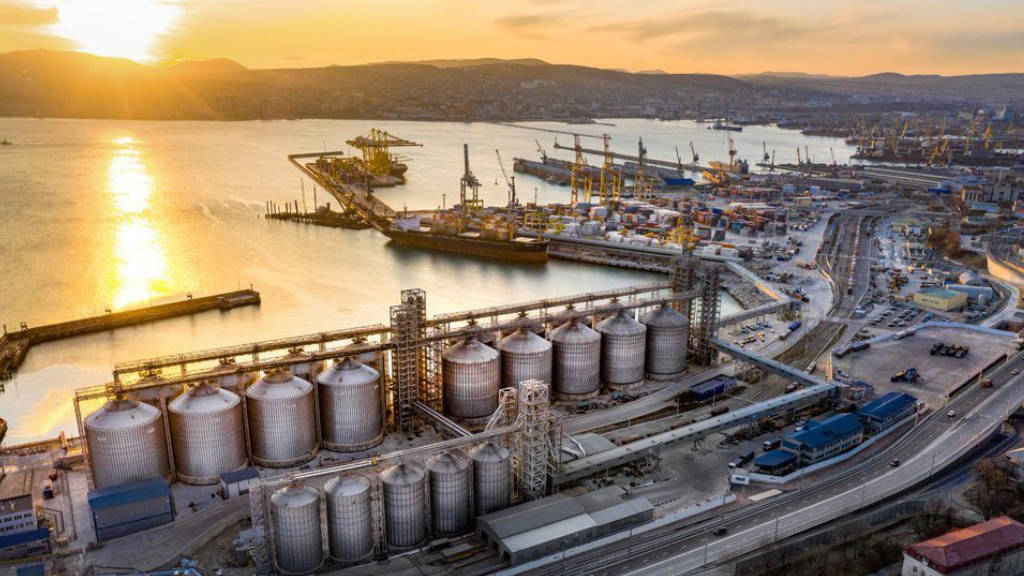
FESCO’s Indian Line West connects the Indian ports of Mundra and Navasheva with Novorossiysk via the Suez Canal and was launched in February 2023. In January this year, the group increased its capacity to more than 1,700 TEU, as well as the frequency of shipments to twice a month due to the installation of a second vessel. In May of this year, FESCO expanded the service route by adding ship calls to the UAE’s Jebel Ali port. 

Further Reading

Russia’s Khabarovsk Begins Exports Of Hardwood Veneer To India

Russia At COP29 – Moving Carbon Regulation To Asian Standards

Published on November 4, 2024

Russia’s pivot to Asia isn’t just about asset re-distribution, shifting supply chains, and new consumers, it is also affecting Russia’s regulatory environment, some of which will impact environmental cooperation with the European Union.  

An example is carbon regulation in Russia, which has been focused on Western markets but is now turning towards Asia. These conclusions were reached at the St. Petersburg Exchange and the Global Climate Initiative (CGI Russia), which has been held as a precursor to the upcoming UN Climate Change Conference (COP29) which will be held in Baku on November 11–22.

Elizaveta Danilova, director of the financial stability department of the Russian Central Bank, said at the event that the Chinese experience of managing climate regulation in China is becoming increasingly significant for Russia. This is because China has integrated multiple sectors of society into energy-saving goals and its commitment to achieving carbon neutrality, whereas the EU and the United States are now lagging behind. An example is city office buildings. In cities such as Shanghai and Beijing, all new office builds must have a certain number of EV (electric vehicle) charging stations in the building car park so office workers can charge their vehicles while working. Older buildings must be refurbished to provide the same. If non-compliant, their operating licenses are revoked. These requirements do not exist in the West. Meanwhile, China is now the world’s largest manufacturer of EVs, upon which the EU has just slapped 45% import tariffs to protect their own, largely petrol-driven vehicle manufacturers.         

This then also becomes a matter of both fiscal prudence – opening up economies to new technologies to drive them forward – and also in providing environmental protection on a national scale.  

That has immense significance for Europe as a continent, as European Russia covers the vast majority of Eastern Europe, and spans roughly 40% of Europe’s total landmass, with over 15% of its total population. However, sanctions, and an overall European reluctance to engage with Russia over any forms of collaboration and cooperation, rule out any Russian initiatives.  

When studying the Chinese initiatives, the Central Bank of China, showing the national path to carbon neutrality, illustrated that the ratio of primary energy consumption to GDP in China has decreased by more than 40% since 2005. That has been achieved by a national commitment to achieving carbon neutrality by 2060, which includes advisory measures in addition to mandatory requirements for Chinese corporates, including its State-Owned Enterprises.

In Russia, there are still a lot of catch-up measures that need to be put into place – Russian energy intensity to GDP is still noticeably higher than China’s and over the past 15 years has remained almost unchanged. In Russia, many climate initiatives are still in the pilot stage and experimental in nature. What needs to happen is that Russia needs to achieve energy-saving goals by integrating them into the performance indicators of managers at all levels of society and business.

Here, Russia is being failed because of its previous alignment with European standards – as the integration of the Russian national carbon regulation system into the Western segment of the global market is now impossible. Russia cannot conduct carbon trading with Europe – a developing problem for the EU as it has an average population density of 109 people per sq km, as opposed to Russia’s 9 people per sq km. Europe needs Russian carbon trade but has cut itself off from Russia’s potential to bury it. Instead, Russia can be expected to use the COP29 platform for alignment with Asian partners, including Indonesia and India as well as China. The Russian delegation at that event intends to participate in the international dialogue by talking about its own practices and improving these. That includes introducing a monitoring system for climate-active substances, the registration of carbon units, carbon trading, and general plans for adaptation to climate change.

Russia Buys Arabic Butter As Consumer Trends See Domestic Consumption Skyrocket

Published on November 4, 2024

Russia has begun to purchase butter from the United Arab Emirates (UAE), the first time it has imported the product from the country. Before, the European Union was a major source of the product, with 28% of all EU butter exports going to Russia.    

Russia began importing UAE butter on October 18, and in the two weeks to November 2, has imported 90 tonnes, according to the Russian Federal Service for Veterinary and Phytosanitary Surveillance (Rosselkhoznadzor).

Russia’s butter imports have also begun from Turkiyie, with an initial batch of 20 tonnes imported in the two days between October 27 and 29. As Russia diversifies its supply chains, consumer product sourcing is beginning to shift, and Russian consumer demand also now increasing. Russia has imported a total of 112,300 tonnes of butter in the period January-October, up 9% year-on-year.

According to Rosselkhoznadzor, 116 overseas butter producers are registered to supply Russia with the product. Of those, 97 of them, from 11 countries have supplied Russia with butter.

Part of the diversification drive is because Russian butter prices have risen 25.7% since the start of the year, according to Rosstat, with the rise in prices drawing significant attention from the Russian authorities. Deputy Prime Minister Dmitry Patrushev recently held two meetings on stabilizing the situation in the food and butter markets. At the second meeting, he gave instructions for daily monitoring of the food market and for exhaustive measures to be taken within two weeks to maintain stability. The reason for the increase is due to Russian consumer surges in Russian-made ice cream and cheese products, as the market shifts to domestic production as opposed to EU imports.    

Russia has proposed introducing a tariff concession for importing up to 30,000 tonnes of butter into Russia from the Eurasian Economic Union. Russia currently needs to import about 25% of its annual butter consumption, as Russian dairies adapt to new market conditions. The Russian butter market is worth about US$1.85 billion in annual revenues, with consumption expected to grow annually by 5.61%.

Further Reading

Vietnam Dairy To Invest In Livestock Farming & Milk Production In Primorsky Krai

Jaguar Land Rover LLC Becomes A Moscow-Owned Company

Published on November 3, 2024

The assets of the British-based auto group Jaguar Land Rover (JLR)’s Russian subsidiary, Jaguar Land Rover LLC, have been acquired by a company belonging to its senior Russian managers, according to information in the Russian Unified State Register of Legal Entities.

The deal was closed on October 31. VSKD Motors LLC, registered in Moscow at the end of 2022, now owns 100% of JLR’s subsidiary, which previously belonged to the British company Jaguar Land Rover Plc. VSKD CEO Vyacheslav Kuzyakov, head of business development Dmitry Ovcharov, after-sales service department head Sergei Skorobogatko, and financial and administrative director Yekaterina Shatalova, who have worked for JLR’s Russian subsidiary since the mid-2010s, have now become the co-owners with 25% stakes each.

Jaguar Land Rover LLC was founded in Moscow in 2008. The company imported, sold, and provided after-sales services for premium Land Rover SUVs and Jaguar cars.

The company’s revenue on the Russian market peaked at more than ₽60 billion (US$613 million) in 2014, when it sold around 23,000 vehicles, including 21,100 Land Rovers and 1,600 Jaguars, according to data from the Association of European Businesses. Revenue fluctuated around the figure of ₽50 billion in subsequent years, apart from a small fall due to the coronavirus pandemic in 2020.

JLR announced it was suspending exports to Russia at the start of 2022. Revenue immediately fell to ₽7.5 billion (US$76.6 million) by the end of that year. Revenue further deteriorated to just ₽1.5 billion (US$15.3 million) in 2023.

The British Jaguar-Land Rover company ultimately belongs to India’s Tata Group. The Russian management will be looking to rebuild the brand’s appeal in Russia.  

Further Reading

China’s Haval To Increase Auto Production At Tula Plant To 200,000 Cars Per Annum As Russian Domestic Auto Market Expands By 50%

Rosatom Bidding For Turkiye’s Second Nuclear Power Plant

Published on November 3, 2024

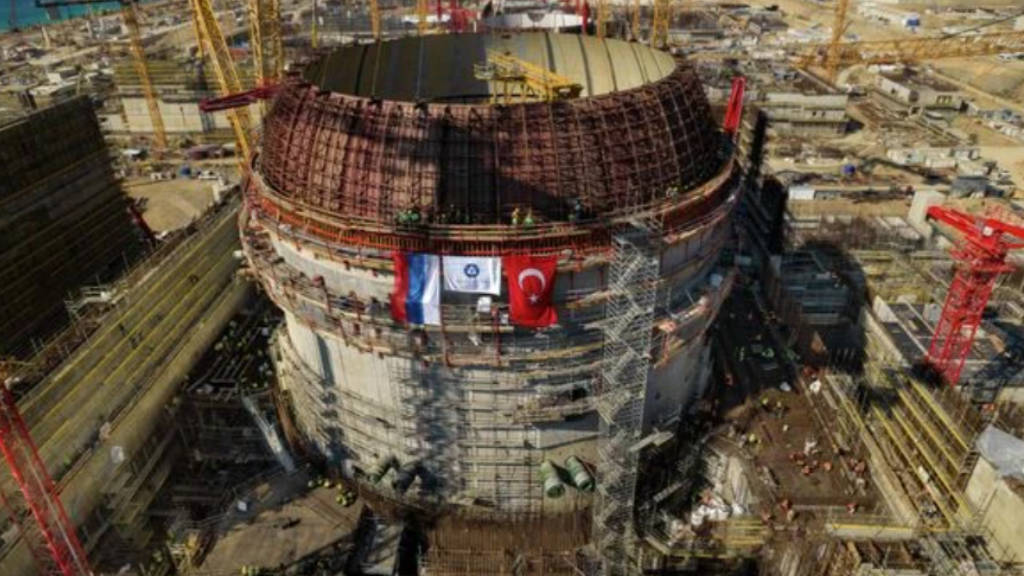
Russian Foreign Minister Sergey Lavrov has said that both Russia and Türkiye will benefit if Rosatom, the state-owned nuclear power contractor, is successful in its bid to construct the planned Sinop Nuclear Power Plant (NPP) on Türkiye’s Black Sea coast. Rosatom is currently constructing Turkiye’s first NPP at Akkuyu. 

Lavrov commented in an interview with the Turkish daily Hurriyet on Friday (November 1). “If it is possible to agree on the parameters of Russia’s participation, it will be a win for both sides. We already have a successful example of this cooperation.”

The Akkuyu NPP is being built by a subsidiary of Rosatom. Its first reactor is expected to be launched in 2025 after a delay due to difficulties in receiving equipment from German tech giant Siemens, Turkish Minister of Energy and Natural Resources Alparslan Bayraktar said in September.

In response to the difficulties of sanctions, Lavrov stated that “Russia has adapted to the pressure of sanctions and is developing successfully. The Russian economy is expected to grow by 3.9% this year. We have the lowest unemployment rate among the largest world economies – 2.4%.”

Lavrov went on to say that the United States has been attempting to “restrict” the abilities of Türkiye and other countries to maintain joint projects and to do business with Russia. He said, “The prospects for our practical cooperation depend on whether experts will be able to find mutually acceptable solutions in the near future.”

The site of the Sinop plant was approved in April. Bayraktar said earlier this year that Rosatom was “ahead” in the bidding process, citing the company’s positive experience working in Türkiye. Once fully operational, the facility will cover 10% of Türkiye’s energy needs.

Further Reading

BRICS, Russia, and Turkiye:  2024 Developments and Implications

Saudi Arabia Gets Foothold Into Russia’s Agricultural Market

Published on November 3, 2024

Saudi Arabia’s Salic (Saudi Agricultural & Livestock Investment) has gained control over several Russian agricultural assets through its purchase of Singapore’s Olam Agri, the Russian Union of Grain Exporters and Producers has said.

The main asset is the Azov Grain Terminal. Eduard Zernin, the Union CEO, stated “Without exaggeration, this is a landmark deal which opens the door to the Russian agricultural market for Saudi Arabia. By acquiring Olam Agri, the Saudis gain control over the shallow-water grain terminal in Azov, and possibly the company Rusmolko, one of the biggest milk producers in Russia which includes three dairy complexes and a herd breeding complex in the Penza region with a livestock population of more than 33,000 head, as well as 152,000 ha of agricultural land. The company has established a closed cycle that includes production, storage, and processing of grain.”

Salic has been actively seeking investment opportunities in the Russian agricultural sector in the past few years, Zernin said. “Now after buying Olam Agri, we can say that the Saudis are entering our market. It’s difficult to overestimate the importance of this event for Russian agriculture, especially in light of the recent geopolitical risks.”

However, Rusmolko (also part of Olam Agri) is not included in the Saudi deal. Rusmolko is part of Olam Global Holdings, a separate company. The deal concerns only the business of the Azov Grain Terminal. The purchase price for the remaining part of Olam Agri is estimated at US$4 billion. If sold, it will enable Salic to gain full control over Olam Agri’s commodity portfolio, which includes grain, edible oils, and other food products.

The Azov Grain Terminal has a capacity of up to 1.4 million tonnes of grain per year. According to its financial statements, revenue in 2023 amounted to ₽13.46 billion (US$137.5 million), compared to 13.435 billion rubles in 2022, with a net profit of ₽143 million (US$1.5 million).

Further Reading

The Middle East and the 2024 BRICS Summit: Executive Summary

Sri Lanka Considering Medical JV With Russia’s Binnopharm

Published on November 2, 2024

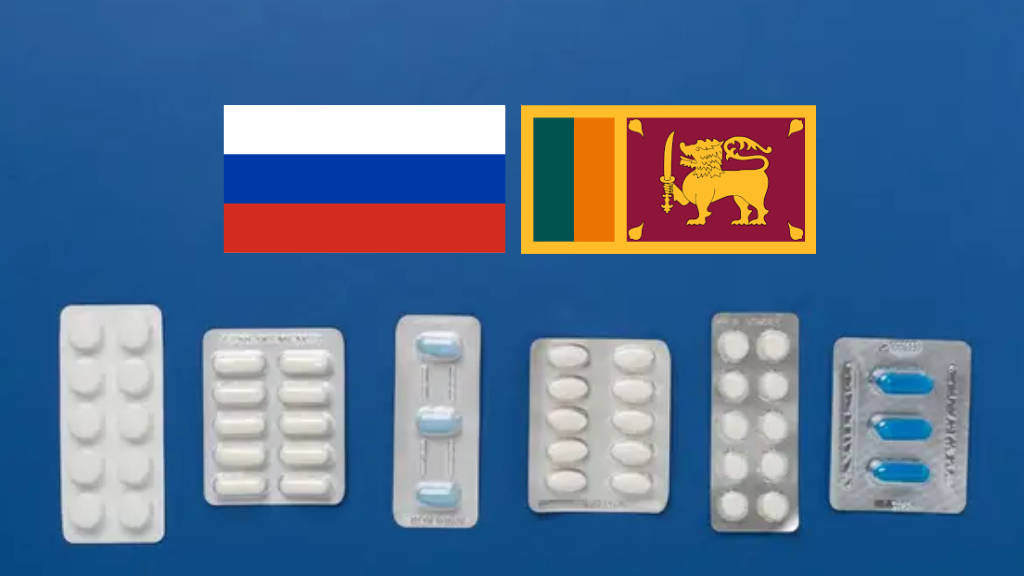
Russia’s Binnopharm Group, owned by AFK Sistema, and members of a Sri Lankan delegation have been discussing options for interaction and international cooperation in the pharmaceutical sector.

Binnopham produces around 300 pharmaceutical products and is a major antibiotics producer in Russia. Approximately 35% of its medicines are produced in a full cycle from the company’s pharmaceutical substances.

Boris Zhorov, the CEO of the company Sintez Plant in Kurgan, said “The Binnopharm Group is actively moving into international markets. During the visit of the Sri Lankan delegation to the Kurgan facility, it became clear that we have many points of contact, and Sri Lanka may become another partner for Binnopharm Group.”

Asia Map

Pakeer Mohideen Amza, the Sri Lankan Ambassador to Russia, said “The Sintez Plant, which produces a wide range of medical products not only for the Russian market but also for foreign markets, is a potentially interesting partner for us.”

Various options for cooperation are being considered, including procurement of medical products from Kurgan, establishing joint production, and using Sri Lanka as a hub for accessing the markets of neighboring countries in the Asian region. The island nation is strategically located in the Indian Ocean and provides access to all the Southeast Asian region, including markets such as the Middle East, India, the ASEAN bloc, and China. A Russian-Indian JV has recently taken over the management of Sri Lanka’s Hambantota airport, which also includes a Free Trade Zone offering tax incentives. Sri Lanka has also applied to join the BRICS.   

Further Reading

Sri Lanka Added To Russian Maritime Service Between Shanghai and St. Petersburg

Kazakhstan To Import 500,000 Tonnes of Bitumen From Russia

Published on November 2, 2024

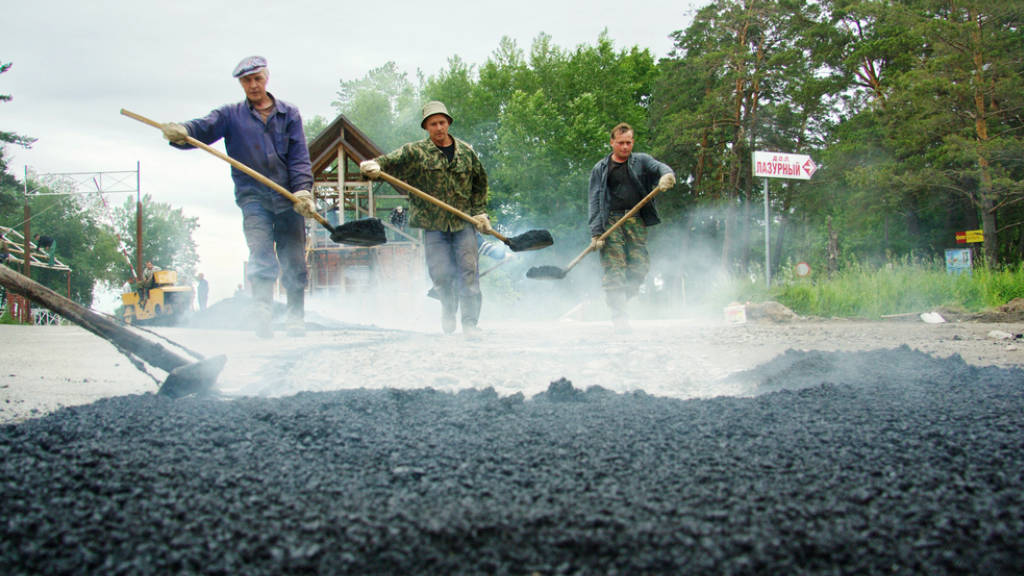
Kazakhstan plans to import 500,000 tonnes of bitumen from Russia this year and determine imports for 2025, according to the Kazakh Ministry of Energy. Bitumen is commonly used in the construction industry. The average price is about US$500 a tonne.

Kazakhstan’s annual demand is about 1 million tonnes, with the country capable of producing 1.2 million tonnes of bitumen per year, however, actual production is lower due to a lack of raw materials. The ministry plans to hold “new negotiations with the Russian side to conclude an indicative balance for 2025”.

Kazakhstan and Russia are members of the Eurasian Economic Union, which reduces or eliminates import tariffs on traded products. Russia is the world’s third largest producer of Bitumen, after China and the United States, producing 7.63 million tonnes in 2023.   

Further Reading

Russia – Kazakhstan 2024 Bilateral Relations: Update

New Israel Port Haifa – Novorossiysk Shipping Service Launched

Published on November 1, 2024

Russia’s multimodal transport operator Ruscon, part of the Delo Group, is launching a regular service for delivering consolidated cargo from Israel to Russia, the company has stated. Goods will be consolidated at warehousing in the Haifa Port, then shipped in large containers to Ruscon’s Delo Group’s marine terminal in Novorossiysk.

Cargo will be deconsolidated at the company’s dry terminal in Novorossiysk. Goods will then be delivered to various Russian regions via Delo’s service companies. The transit time between Israel and Russia is 10 days. Goods will be dispatched twice a month.

Ruscon CEO Sergei Beryozkin stated “The service is oriented towards a wide range of goods, including dangerous cargoes and chemical products. We expect it to open up opportunities for our e-commerce segment to transport small shipments from Israel.”

Ruscon operates three container terminals located in Novorossiysk (capacity 110,000 TEU), Moscow (80,000 TEU), and the Volgograd region (30,000 TEU).

The Delo group of companies manages sea container terminals in the Azov-Black Sea, Baltic, and Far Eastern basins, a network of railway container terminals, and a fleet of containers and fitting platform railcars. Delo Group’s transport and logistics business includes intermodal container operator Transcontainer and the multimodal transport operator Ruscon, while the stevedoring business consists of the DeloPorts holding and Global Ports, the leading operator of container terminals.

Russia-Israel bilateral trade is currently about US$1 billion per annum but has been disrupted by the outbreak of hostilities. Russia exports various products, including diamonds, while Israel exports mainly fruits. 

Further Reading

The Middle East and the 2024 BRICS Summit: Executive Summary

Russia’s 2024 IPO Market Booms With The Average 5 Times Over-Subscribed 

Published on November 1, 2024

During this year, a long-awaited IPO boom has occurred in the Russian market. In less than a year, 14 new issuers placed their shares on the open market, and another began collecting applications — the best result since 2007. Driving this are institutional investors, but increasingly private investors are also now involved. For 2025, Russian bankers see a continuing improvement in performance.

In part, the boom has occurred as Russian investment capital has been scared away from international markets due to Western sanctions and the freezing and disposal of their assets. To encourage the return of Russian capital, the Russian government has also introduced numerous tax incentives, other financial inducements, and specific policies designed to attract Russian capital back to Russia, in addition to considerable Russian market opportunities suddenly becoming available due to Western corporate exits. As President Putin has coyly remarked, “Russian money is safe from sanctions in Russia.”  What we are now seeing are the results: Russian capital is instead being invested back into Russia.   

In 2024, the Russian market for primary share capital and IPO transactions (Initial Public Offering) finally emerged as independent of international markets and foreign investors. During 2023, there were eight IPOs valued at ₽41 billion (US$423 million). In the first ten months of 2024, that figure is now ₽81 billion (US$835 million) – nearly double last year’s performance. There will be other IPOs during 2024 as well – Lambuiz, a manufacturer of cardboard packaging for milk and dairy products should have completed its IPO at the end of October, valued at just under ₽1 billion (US$10.5 million).

In addition, over the past two years, 14 Secondary Public Offerings (SCO) have taken place, with a total value of ₽158.8 billion (US$1.64 billion).

In terms of the sheer volume of initial transactions, 2024 has seen the highest IPO volume in Russia for the past 17 years.

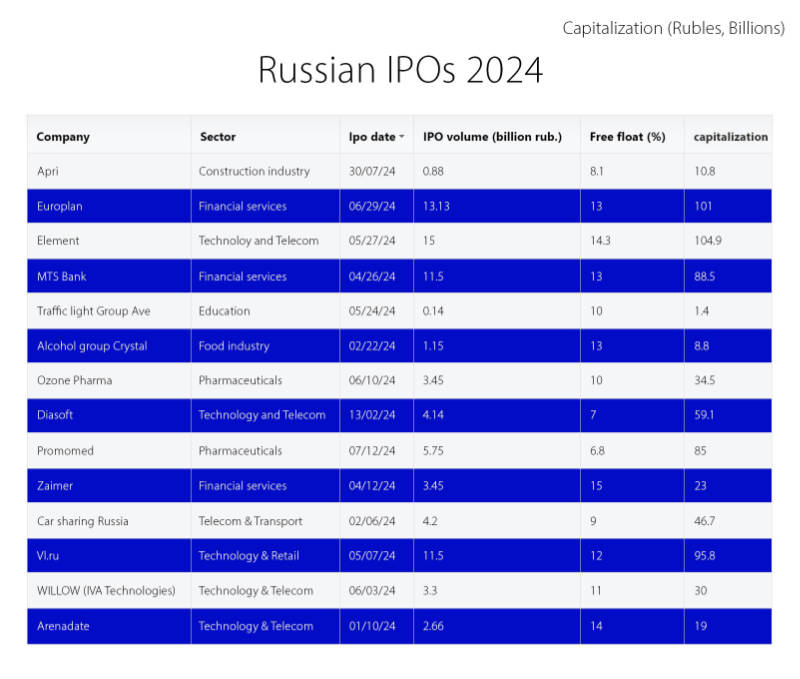
Russian IPOs 2024

Historical Background   

No one could have imagined such a rapid market recovery just two years ago, as Western sanctions have confronted the Russian economy and its businesses with unprecedented challenges. The Russian stock markets were not immune. Among the hardest hit were the debt and equity capital markets, which were cut off from cheap money from non-residents who had been willingly buying Russian shares and Eurobonds for many years.

For example, during Rosneft’s IPO, British Petroleum (BP) purchased US$1 billion of equity, Malaysian Petronas purchased US$1.1 billion, and China’s CNPC US$500 million.

In VTB’s IPO, among the largest buyers was the Singaporean state fund Temasek, which bought 5% of the placed securities (US$400 million), and its Capital International Fund about 3% of the placed securities (US$240 million).

That is why for many years, Russian IPOs were placed by international investment banks such as Goldman Sachs, JPMorgan, Morgan Stanley, Citi, Deutsche Bank, UBS, and many others, while the main placements were in the world’s largest exchanges: the London Stock Exchange (LSE) and North America’s NASDAQ.  At that time, the percentage of foreign capital in Russian IPOs averaged between 70–75%, and in some cases, 90%. 

Now these foreign investments into Russian IPOs are for the present, largely a thing of the past.

Adaption

Transactions carried out in 2024 show that the Russian market has successfully adapted to new non-market conditions and managed to become fully operational in attracting not only debt but also share capital. The main change is that the IPO agenda began to be determined not by foreign investment banks as before but by Russian domestic banks and brokers. International investors have been replaced by domestic institutional and private investors.

Russia’s institutional investors have always played an important role in the market, and many of the Russian portfolio managers also managed foreign equity funds, but Russian private investors are a relatively new phenomenon. Largely cut off from SWIFT and the ability to send money overseas, that capital – earned in Rubles – is now placed in Rubles in Russian stocks. This closure of world markets to Russian investors, and the blocking of foreign securities, has facilitated a change in Russia’s traditional investor profile. 

With the isolation of Russia, it has been Russian individuals who have now emerged as the new key driving force in the Russian stock market. According to the Moscow Exchange, individual accounts in stock trading volume now represent 77% of the total for the second consecutive year. Ordinary Russians are buying into the new Russia.

By the end of September 2024, the number of unique brokerage accounts on the Moscow Exchange amounted to 33.8 million, with 4 million new individual accounts opened since January 1. According to the Bank of Russia, in the period January-June, new private Russian investors placed ₽9.4 trillion (US$97 billion) into the Russian stock market, with this capital now in search of interesting investment ideas.

As a result, achieving IPO status became more attractive to a wider range of companies, including SMEs, which were not previously of great interest to Russian investors. During 2024, the smallest company able to conduct an IPO was the IT business Traffic Light Group, who raised ₽1.4 billion (US$14.5 million). Genetico, who specialise in genetics and reproductive medicine, raised ₽1.5 billion (US$15 million). The average investment in these placements was just ₽60,000 (US$620). 

Needless to say, the real excitement amongst Russian individual investors was caused by lPOs with a capitalization of over ₽50 billion (US$515 million). According to the Moscow Exchange, the MTS Bank (Personal finance) IPO attracted 202,000 inquiries and was 10 times over-subscribed. Diasofta (IT) was 35 times oversubscribed and Europlan (Automotive leasing) 9 times. On average, amongst all Russian 2024 IPOS, order books were oversubscribed five times.

Regarding 2025, Russia’s capital market players remain optimistic, with a common theme being the normalization of the Russian market and its economic performance, including the stabilization of the key interest rate.  Due to pent-up demand, 2025 may bring even more high-quality IPOs.

T-Bank’s Head of Capital Markets Administration, Anton Malkov does not rule out up to ten major IPOs, while a big deal reserve is also building up. Companies from different sectors, very interesting business areas, and many industries not yet represented on the market are all now coming to the market. A large percentage of these newcomers are raising capital to invest in expansion overseas, especially within the CIS, EAEU, and BRICS. Russian businesses seeking expansion into friendly countries are now seen as being both patriotic, exotic and more importantly – onto a sustainable growth trend.

This article has been translated from and adapted from the article “IPO: новый сезон” which originally appeared on Kommersant here.  

Further Reading

UAE Investment Fund Buys 6.86% Of Moscow Stock Exchange