News

Russia’s Globaltrans Delists From London, Relists In Astana 

Published on November 1, 2024

The major Russian cargo carrier Globaltrans is to leave the London Stock Exchange (LSE) on November 22, and has already relisted in Astana, Kazakhstan. The company is one of Russia’s largest rail transport groups, and is focused exclusively on the freight logistics sector in Russia and the Commonwealth of Independent States (CIS), providing services for metals, mining, and petroleum and other industries. At the end of December 2023, its fleet included 65,644 units of rolling stock: 70% being universal gondola cars, and 28% tank cars.

With the Russian trade in these products growing significantly with China, (which borders the CIS) Globaltrans had produced a strong set of results in 2023. Their turnover had increased by 11% to ₽105 billion (US$1.1 billion) while profits had risen to ₽38 billion (US$391 million) up from ₽25 billion in 2022. Their last annual report can be seen here.

Globaltrans has not been sanctioned, yet stated that in London, the company faced an ongoing difficult regulatory environment and stressed there was no possibility of resuming trading on the LSE in the foreseeable future.

On October 22, Globaltrans was listed on Kazakhstan’s AIX exchange. Trading in its securities was launched under the ticker GLTR, ISIN: US37949E2046. It began trading at a value of 1:80 and has subsequently risen to 1:90 as at close of trade on October 31. 

Globaltrans stressed that AIX will become the only platform on which the freight carrier’s GDR will now be traded. The main shareholders of Globaltrans are Aqniet Capital of Kazakhstan, with 26.7% of shares, and Marigold Investments Ltd with 11.5% of shares, whose beneficiary is Globaltrans co-founder Andrey Filatov.

Further Reading 

Russian MNC In The West Redomicile To Friendlier Jurisdictions: Two Case Studies

What Will Happen With Russia If Donald Trump Is Elected As US President?

Published on October 31, 2024

The US Presidential elections are being held next Tuesday, November 5th, and early indications point to a Trump victory. But how will this impact Russia?

Russian President Putin has suggested that whoever becomes US President “makes no difference” as the United States is so anti-Russian anyway, that having either Trump or Harris as President is inconsequential.

While that can (and has) been dismissed as Putin being coy, it is in fact the intellectual academic position.  Nicolai Petro, a Professor of Political Science at the University of Rhode Island, is well known for his theories concerning the differences between the United States and Russia. Petro believes that the United States – and NATO – represent ideologies different from those of Russia and the BRICS bloc.

With the Ukraine conflict, this has manifested itself as a collision of intellectual thought. From the West’s perspective, as Petro puts it, this means that “the expansion of liberal values will lead to global peace and prosperity.”  This is one reason why the ‘woke’ and gender-fluid concepts have become so popular in recent years as academics promote these as values. However, this needs a global, yet hegemonic ‘liberal platform’ to underpin it. This liberalism, Petro suggests, is a form of ‘binary thinking’ and can only end in conflict.   

However, Russia – and the BRICS, Petro states – have taken a different stance. They believe that cultural and political diversity are the keys to global peace and prosperity. These beliefs lie in the institutional construction of a civilization based upon multi-polarity. Again, the term ‘multipolar’ is now being expressed in the East. BRICS thought, Petro says, is built around the concept of ‘sovereign democracy’ and is rather more sophisticated than often recognised in the West. What is occurring then is a collision between Western hegemony and Eastern democracy, or ‘realism’. Yet here too, Petrov suggests, realism itself is a form of binary thinking and can only lead to a conflict with liberalism.  

There are many different facets to this argument and the reasons for these differences of opinion. Some solutions can be found, Petro believes, via a change in the way in which politics is determined, likening what needs to occur as a profound shift in academic thought. Here, he makes comparisons with and envisages a world where diplomacy is enhanced, neutrality is respected, and efforts are made to identify areas where national values overlap. It is irresponsible, he suggests, to descend into isolationism. Such moves are dangerous, he believes, as they “tear into the fabric of our global society.”

He also suggests that global leaders should ‘transcend’ politics by also taking into account other social values, such as religion – as long as these are defined as separate organs in the civilizational makeup. Its heavy material, however well worth a listen to understand the core differences between East and West, and, as he puts it, “NATO hegemony vs. BRICS multipolarity”. Petrov’s 15-minute presentation can be viewed here.

Yet listening to Petro, the gloomy aspect of this is that the natural outcome, unless there is considerable academic and political will on both sides, is continuing division and conflict.  In short, Presidents may come and go, but the end result without a fundamental shift will remain the current status quo. This also appears to be Putin’s current perspective.

But then again, Petro doesn’t factor in the Trump effect.

So, what can we make of Trump? He may not be an academic, but he is certainly street-smart. He also tends to call a spade, a spade, which upsets those who prefer a less confrontational style. Interestingly, he has stated, truthfully, that during his previous term as President, the United States pulled back from conflicts. He has also stated that he would end the Ukraine and Israeli conflicts, mainly by closing down financial and military support. That would leave Europe with an existential crisis to resolve, but that has to be better than the continuing violence and deaths.

The early indications are that an underlying point in the US elections is the American public’s dismay at all the money being spent on Israel and Ukraine, while their economy has problems of it’s own. US media is full of images of carnage, destruction, and death, and Americans are tired of this constant bad news. Trump, in saying he will resolve these conflicts, represents hope.

For Russia and Ukraine, if this is correct, this is obviously a positive step. Granted, a geographical settlement will need to occur, however, the Donbas region where most of the fighting has been taking place, has not been under Kiev’s administration for over a decade now, and neither does it want to be. The West conveniently forgets that the government leaders of Donetsk and Luhansk declared independence from Kiev in 2014. Moscow declared them as part of Russia in 2022.

The damage here is more likely to be in Europe, with political leaders then having to face accounts of why they spent so much money on a conflict that did not involve an EU nation and that they subsequently lost. That may have multiple repercussions, some of which may be in Russia’s interests.

However, the longer-term problems – NATO vs. BRICS ideologies – are likely to remain – unless Trump, emboldened perhaps by record approval numbers for having stopped these conflicts, goes a step further and stops funding NATO. He had previously stated he may do so, regarding it as an expensive US cost that is there to protect Europe but with the US remaining as the largest contributor. For Trump, that is unfair, and with him, it is all about the money.

When this position is factored in, should it come to pass, then the NATO hegemony question fades away, and gives in, instead, to a new era of BRICS based multipolarity. It will mean the end of the move towards Western liberalisation, and a return to democratic sovereignty. In time, the better aspects of globalisation may begin to return. Readers can make up their own minds which they would prefer. We will all find out, next week. 

Further Reading

BRICS 2024 Heads of State ‘Kazan Summit Declaration’ – Contents & Analysis

Iraq Interested In BRICS, Latest Russia-Iraq Trade and Investment Data

Published on October 31, 2024

The Russian Ambassador to Iraq, Elbrus Kutrashev, has stated that the Iraqi government is interested in BRICS, but it is too early at present to talk about the country becoming a member. Speaking to Izvestia, he said “Russia is in fashion among Iraqis now. There are many who want to visit Russia for tourism or business purposes, our exchange of delegations is more active, and the BRICS association is becoming very interesting, in which Baghdad understands that Russia plays a significant role.”

However, Kutrashev cautioned that the United States would try and counter such steps, saying “Should the US learn that Iraq has begun practical steps to join the BRICS, they will try to prevent this. Iraq cannot afford another confrontation with the United States. So, it is too early to talk about this now, but we will come to it in time.”

Kutrashev added that the United States is “irritated” by the fact that Russia is “very popular among influential political organizations and some of the armed groups”.  Apparently, when Russia’s special military operation in Ukraine began, some Iraqi units put up portraits of Russian President Vladimir Putin on the streets of Baghdad. “This was a clearly expressed support for Russia” he noted.

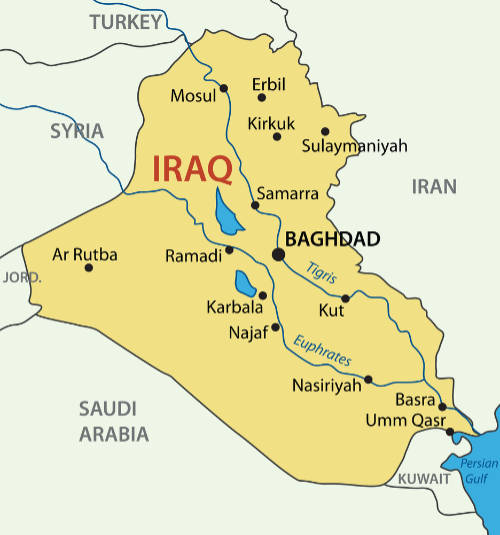
Iraq Map

Energy

Russian trade and investment with Iraq is dominated by the energy sector. Russian Foreign Minister Sergey Lavrov said in September that Russia had invested over US$19 billion in the Iraqi energy industry, with Luk Oil, Gazprom Neft, and Rosneft accounting for the bulk of this investment. Russia is looking to expand its investment in Iraq to about US$45 billion by 2035.

Up to 96% of Iraq’s revenues come from the sale of its crude oil, with Russia one of the largest players in Iraq’s oil and gas sector. Russia and Iraq have signed new agreements aimed at increasing cooperation in the energy field, including exploration projects, drilling, and gas flaring reduction. Luk Oil operates a large oil project in Qurna, located in Basra province. Recently, the contract for the development and production of Iraq’s Western Horn 2 oil field has been extended until 2045 aimed at increasing production up to 800,000 barrels per day.

The presence of Gazprom in the Badra oil field in the Maysan and Garmian block is also important. Other Russian energy companies such as Zarubezhneft, Tatneft, are working to increase access to opportunities in Iraqi oil.

Iraq’s Dhi Qar Oil Company signed a contract with Russia’s Luk Oil last year to set up the Eridu oil field. This will increase daily production from 30,000 to 250,000 barrels. Rosneft has also acquired 60% ownership of the Kirkuk-Ceyhan pipeline, which feeds into Turkiye.

There are other projects under consideration, including the Turkiye-Syria oil pipelines, the revival of the Iraqi-Syrian pipeline, the gas pipeline from Kirkuk (Northern Iraq) to Europe, supplying Iraq’s domestic needs for electrical energy, and investing in the oil refinery in Mosul. Regardless of EU sanctions on Russian energy supplies, money from the EU will continue to flow to Russia as part of the return of investment in infrastructure supplies, as well as Turkiye’s emergence as an EU energy hub.  Turkiye mixes Russian oil and gas with other energy sources such as Iraq, refines this, and resells it to the EU.

The OPEC+ agreement provides close cooperation and greater coordination of countries with both rich oil resources and common interests with the aim of maintaining stability in the global energy market.

Industrial Cooperation

For both countries, it is important to achieve national development goals, ensure economic security, increase non-resource and non-energy exports, and release economic potential in relations. About 50 Russian companies operate in Iraq. For example, a Russian consortium is implementing a large project to renovate and modernize a glass and ceramic products factory in Iraq’s Anbar province.

Food Security

Iraq imports 50% of its food, with Baghdad increasingly looking to Russia to meet its annual requirement to import 4-5 million tons of wheat. Bilateral trade was affected by a significant increase in the purchase of sunflower oil, wheat flour, and animal feed in 2022 and both are looking to establish shock-proof supply chains. There is also potential for investment in modernizing the Iraqi agricultural industry, improving food security, and sustainable agricultural development.

Transport and Infrastructure

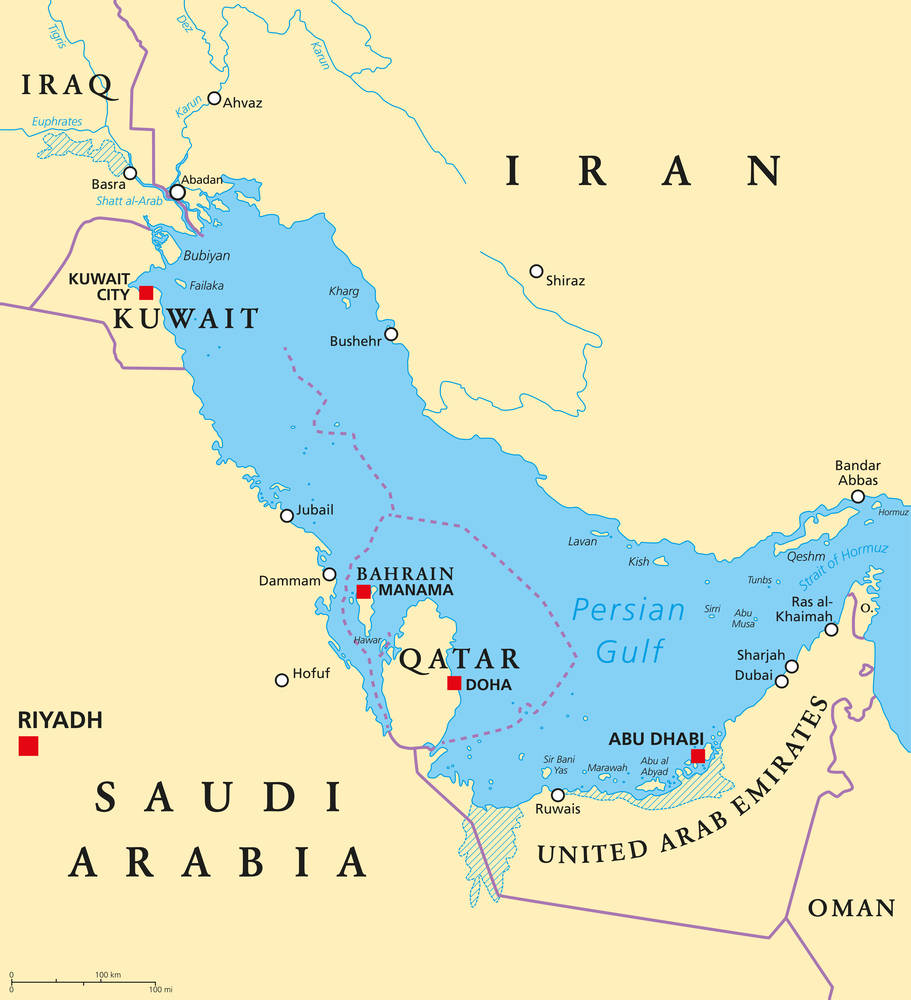
According to the Prime Minister of Iraq, Baghdad wants Moscow to participate in the launch of the US$17 billion Iraq Development Road project, which would run 1,200 km from Turkey to Iraq’s Faw Port, near Kuwait in the Persian Gulf. This would become an eastern part of the International North-South Transportation Corridor; and is under study to ascertain viability. Last year, an air services agreement was also signed between Iraq and Russia. Iraq has also recently joined the TIR convention.

Iraq and Russia also recently signed a maritime transport cooperation agreement to facilitate the passage of goods and passengers through their seaports. Bilateral efforts in infrastructure development, various infrastructure projects such as airport renovation, and urban development initiatives would all help trade and increase trade route capacity.

Further Reading

Syria Negotiating To Join BRICS

Russia – Cuba Livestock Trade

Published on October 30, 2024

Russia has received the right to export livestock products to Cuba, in moves that should provide a boom for Russian exporters operating in this sector.

The Russian Federal Service for Veterinary and Phytosanitary Surveillance (Rosselkhoznadzor) has been looking at developing foreign markets, and an audit of the Russian system for control and oversight of animal-origin food production carried out this year by Cuba’s National Center for Animal and Plant Health. Cuba subsequently recognized Russia’s current control and oversight system.

Russian enterprises producing poultry meat, pork, beef and dairy products listed in the Cerber component of the Federal State Information System for Veterinary Medicine’s export register can now ship their products to the Cuban market unimpeded.

This does not only extend only to products but may also include genetic samples that can assist with improving Cubas’ own animal livestock.

According to the World Population Review Cubans consume an average 19kg of pork per annum, more than the Brazilians, an average of 8kg of beef, similar to China’s consumption, and 30kg of chicken per annum, 5kg more per annum than the average Chinese.   

The United States has the highest per capita consumption rates in the world, averaging 30kg of pork, 38kg of beef and 52k of chicken. Americans eat about double the amount of meat that Cubans do.

Russia’s per capita annual consumption of these products is 28kg of pork, 12.5kg of beef and 31kg of chicken, or about 60% of the American total meat consumption.

Further Reading

Cuba Applies To Join BRICS

Russia Plans To Increase Agricultural Exports To Thailand By 5 Times  

Published on October 30, 2024

Russia has the potential to export more than US$210 million worth of agricultural products to Thailand per year by 2030, according to Dmitry Krasnov, the head of the Russian Ministry of Agriculture’s Agroexport Center. He was speaking at a business mission by Russian exporters to Thailand on Tuesday (October 28).

Krasnov said that “At present, the possibilities for our trade with Thailand are not fully realized. We estimate the overall potential for exports of Russian agricultural products to Thailand at more than U$210 million by 2030. In the foreseeable future we expect to increase shipments of grains and grain legumes, fish and seafood, as well as oil and fat products.”

Thailand has not been a priority export market for Russia – until recently, when Western sanctions on buying Russian produce forced its exporters to look elsewhere. As a result, Russian exports of agricultural products to Thailand have almost doubled year-on-year to US$39 million in the first nine months of 2024. Russian exports of wheat flour and frozen fish saw the strongest growth, increasing by 100% and almost 80% respectively.

Krasnov said that “Fish and seafood are one of the main products in Russian agricultural exports to Thailand. Since 2019 we have managed to increase the volume of shipments more than three times by volume and 70% by value. Frozen fish made up 96% of exports. We face the challenge of maintaining the positive dynamic and expanding the assortment of Russian exports to the market of Thailand.”

Achieving these plans to increase exports will depend in large part on resolving issues related to customs regulation. While the Thai market is open for Russian wheat, imports of grain legumes are subject to prohibitive duties, limiting the ability of Russian suppliers to export to the country, Krasnov said. Meanwhile, exports of grains and grain legumes to Vietnam, Indonesia and other countries in the region are growing.

High import duties are also a barrier to exporting vegetable oil to Thailand. “Russian oil and fat products are not currently shipped to this country, and high customs duties have been imposed on exports of sunflower oil from Russia,” Krasnov said. However, he expressed confidence restrictions can be reduced through joint efforts.

Bilateral trade in agricultural products between Russia and Thailand dropped 14.8% to US$196.7 million in 2023, as Thailand’s imports from Russia fell 28.5% to US$58 million and its exports to Russia dropped 7.3% to US$138.7 million, Agroexport said in a report prepared for the business mission. Russian imports from Thailand consist primarily of canned fruit and nuts, canned fish, starch and rice.

Thailand has just become a BRICS Partner and both sides will be looking to get bilateral trade volumes back on track.

Further Reading

Thailand Applies To Join BRICS

Russia – Kuwait Bilateral 2024 Relations: Update  

Published on October 30, 2024

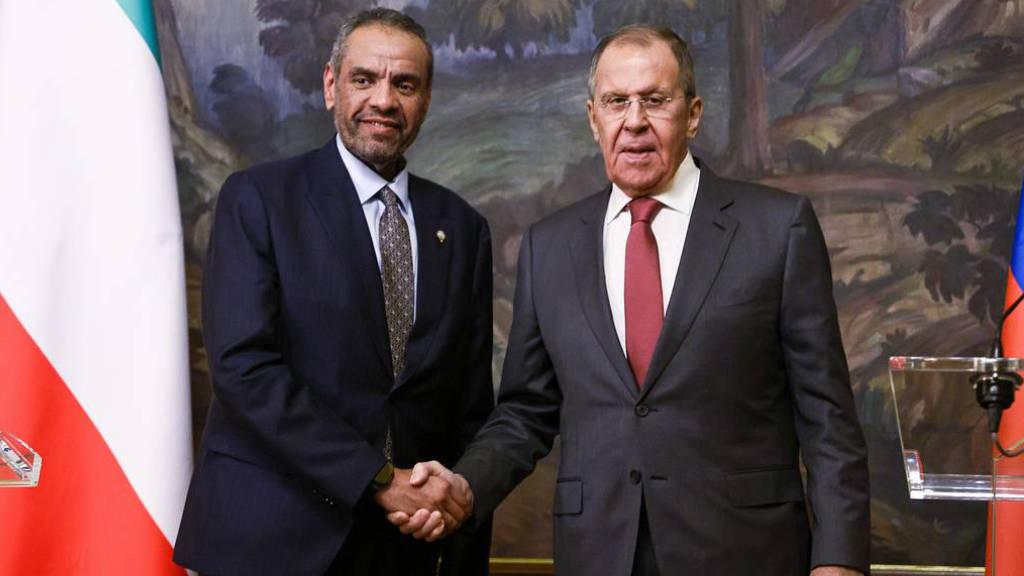
The Russian and Kuwaiti Foreign Ministers have met in Moscow, with Russia welcoming Kuwait’s growing interest in developing relations between the two countries, according to Russian Foreign Minister Sergey Lavrov following talks with Kuwaiti Foreign Minister Abdullah al-Yahya.

Lavrov said “We have welcomed the growing interest of the governments, departments and business circles of the two countries in developing relations in all areas of our bilateral cooperation.”

Lavrov noted that the parties paid particular attention to facilities and resources of the relations, which is handled by the Russian-Kuwait intergovernmental commission on trade, economic, scientific and technical cooperation. “The commission has not met for a long time, and we agreed to speed up its seventh meeting. It should take place in Moscow, we will try to do this by the end of this year.” 

The two countries are also working on introducing a visa-free regime between them help facilitate trade and tourism. 

Kuwait Map

The political ties between Russia and Kuwait are characterized by relatively close diplomatic ties, mutual visits, and growing, yet still modest cooperation in trade and investments. Both have maintained diplomatic relations for decades, with Kuwait being one of the Gulf Cooperation Council (GCC) countries that prefers having close ties with Russia. Both also collaborate within the framework of OPEC+ (which includes OPEC members and non-OPEC oil-producing countries like Russia) to manage oil production levels and stabilize global oil prices.

All this is possible despite Kuwait’s own close security and military relations with the US. Moreover, Kuwait and Russia often have similar positions on the conflicts in the Middle East by advocating a two-state solution to the Palestinian-Israeli conflict, or the post-war Syria.

Kuwait’s position on the conflict in Ukraine can be characterized as balanced and pragmatic and despite external geopolitical pressures, Kuwait continues to practice a neutral policy.  

Russian companies are interested in opportunities in infrastructure development and real estate in Kuwait. Given global trends, Kuwaiti investors are exploring opportunities in Russia’s growing technology sector, including fintech, health tech, and e-commerce. Kuwaiti businesses are attracted to Russia’s oil and gas projects, including upstream exploration and development projects, considering Russia’s vast natural resources.

Kuwait has a wealthy petroleum-based economy, and is one of the richest countries in the world, with the Kuwaiti dinar is the highest-valued unit of currency in the world. According to the World Bank, Kuwait is one of five nations with a GNI per capita above US$70,000. However, while Kuwait is currently the GCC region’s most oil-dependent country – it also has the weakest infrastructure and lowest share of economic diversification.

Current Russia-Kuwait bilateral trade is valued at about US$1.5 billion. Kuwait exports electrical products to Russia, Russia exports iron, copper and chocolate. Trade ties are likely to remain conservative, however Kuwait does need to diversify its economy and will want to be associated with the BRICS group in one form or another. 

Further Reading

Russia – Gulf Cooperation Council Trade & Relations: Update  

Russia – Tanzania 2024 Bilateral Relations: Update  

Published on October 30, 2024

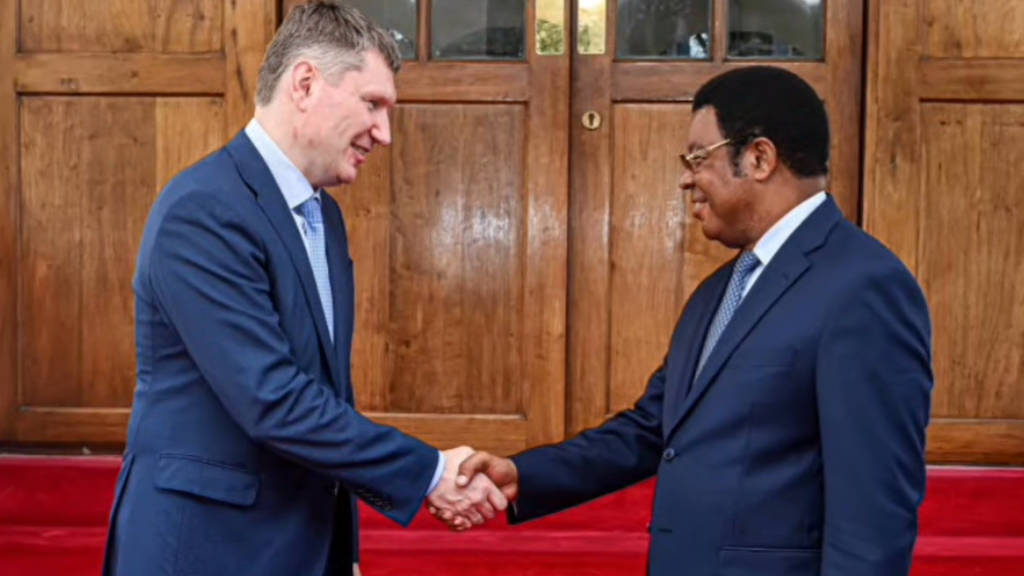
Russia and Tanzania are capable of doubling their trade, and Russian businesses display an interest in joint projects in energy, agriculture, infrastructure, and tourism, Russian Economic Development Minister Maxim Reshetnikov said while meeting with Tanzanian Prime Minister Kassim Majaliwa.

A Russian delegation led by Reshetnikov arrived in Tanzania on Monday (October 28) to take part in the first meeting of the Russian-Tanzanian intergovernmental commission on trade and economic cooperation.

“We stand ready to help the Tanzanian economy maintain the high pace that has been achieved in the energy, agriculture, infrastructure development, and tourism sectors,” Reshetnikov said, adding that around 50 Russian companies are taking part in the Russia-Tanzania business forum.

“Mutual political and diplomatic understanding between our countries provides good preconditions for stepping up trade and economic interaction. There is considerable unused potential. According to our estimates, trade between our countries could double.”

Tanzania Map

Tanzanian businesses have displayed a huge interest in Russia, and Russian businesses are willing to enter new markets, invest in joint projects, and share technology, he said.

Current Russia-Tanzanian bilateral trade is running at about US$400 million, with Russian exports making up 85% of this. Russian exports include grains and fertilizers, while Tanzanian exports include coffee and tea. However, there is great potential for developing Russian tourism facilities in Tanzania, the country has a spectacular Indian Ocean coastline and a rich heritage. The country also has a well-established wildlife safari industry and includes the ecologically famous Serengeti National Park.    

Russian corporates are also interested in developing the Tanzanian LNG sector and Indian Ocean maritime transport and logistics. Tanzania has also expressed interest in joining the BRICS and are ditching the US dollar in favour of using their own respective currencies. 

Russia’s FESCO Transportation Group is also considering the launch of a new shipping services between Russian ports and Tanzania, according to the company vice president, Dmitry Pankov. He was speaking at the two countries’ Intergovernmental Commission currently being held in Tanzania, and said that “In the near future we plan to launch services that will link Russian ports with the port of Dar es Salaam in Tanzania. Initially this will probably be services with transhipment in India and subsequent sailings to Novorossiysk, the Far East and St. Petersburg, but our objective is to open a direct service. Tanzania could serve as a major transport and logistics hub for shipping goods to other countries in East and Central Africa.”

Further Reading

Africa and the 2024 BRICS Summit: Executive Summary

Bank of International Settlements Poised To Cease Cooperation With mBridge

Published on October 29, 2024

The Basel-based Bank of International Settlements (BIS) is poised to drop cooperation with the mBridge financial settlements system, in a move that would delay the introduction of any alternative financial settlements system to SWIFT.

mBridge has been developed by the Central banks in China, Thailand, Hong Kong, and the UAE, and has recently and successfully concluded a pilot testing phase. It went live in June with the UAE using it to transfer Dirhams to China. The mBridge architecture is the backbone of what would become the proposed ‘BRICS Pay’ financial settlements system and is designed to facilitate international payments without routing through U.S. banks. It has been a central discussion point among Central bank and finance chiefs at the recent IMF, World Bank and BRICS summit meetings.

We previously discussed how mBridge works here and the BRICS Pay system here.   

The BIS is an international financial institution which is owned by member central banks. Its primary goal is to foster international monetary and financial cooperation while serving as a Central bank ‘banker’. Its initial purpose was to oversee the settlement of World War I war reparations. It also provides banking services, but only to Central banks and other international organizations.

The BIS members are the Central banks of 63 jurisdictions: 34 in Europe, 16 in Asia, 5 in South America, 3 in North America, 3 in Africa, and 2 in Oceania. The United States is represented by two members, the United States Federal Reserve System and Federal Reserve Bank of New York. The Central Bank of Russia is a member but has been suspended since March 2022.

Of its 63 member banks, 40 are on Russia’s ‘unfriendly nations’ list while the governing board of directors is dominated by pro-Western countries – only Brazil, China and India are considered ‘Russia friendly’. This means that the potential for the BIS to cease cooperation with mBridge is very likely.     

The BRICS intention has been to declare a cooperative effort to de-dollarize its mutual trade – estimated at being US$678 billion in 2023 and compromising 20% of the global total. Based on the mBridge platform, the new BRICS Pay concept would see countries use their sovereign currencies directly as opposed to the SWIFT system and monitored by the BIS.   

However, the BIS General Manager, Agustin Carstens, stated this weekend that the BIS won’t back projects directly linked to sanctioned countries.

Implications

Should the BIS cease working with mBridge, it will create unease amongst at least 30% of its members and further raise profound opinions globally that the collective West continues to insist that the global community must only use its own systems. This has previously been accepted, but there is increasing resistance to this viewpoint given the non-Western view that the manner in which the West has imposed sanctions upon Russia, and begun taking Russian assets. There are  concerns that Western systems do not always conform with international laws and could be used against them should they not follow Western instructions.

The perception that the United States has grown into becoming the sole arbitrator of global institutions without any recourse is gaining popular ground. Should the BIS drop mBridge, and effectively prevent the capability for countries to trade their own currencies with whomever they choose, the longer term, global political fallout could be damaging.

The future for mBridge, in the event that the BIS ends cooperation with mBridge, is that the BRICS nations concerned go it alone. The four founding mBridge developers are all BRICS aligned, while the full BRICS Heads of State endorsed the BRICS Pay concept in articles 64-67 in their recent ‘Kazan Declaration’.  

The United States could also respond with sanctions against countries using mBridge, which would mean a trade war with China. Donald Trump has suggested he would do just this, and impose 100% tariffs on imported goods from any country that used ‘de-dollarisation’ tactics.   

Whether the United States and the collective West are prepared to instigate such a move remains unclear. But what is evident is that Western sanctions upon Russia are now morphing into a global battle over the right concerning sovereign independence within global financial systems.

Further Reading 

Russia Preparing For Crypto Transactions By 2025 In Foreign Trade

Arkhangelsk Wants Chinese Investment To Jointly Produce Arctic Standard Container Equipment

Published on October 29, 2024

The Arkhangelsk Region wants to establish joint ventures with Chinese companies in Dalian (Port Arthur) to manufacture specialized container equipment, as well as service centres for their  maintenance. Arkhangelsk and Dalian are linked by the Northern Sea Passage, a growth route for Russia-China trade. 

The scheme was discussed on October 24, 2024, during a meeting between the Governor of the Arkhangelsk Region, Alexander Tsybulsky, and the governor of Liaoning Province, Li Lechen.

Tsybulsky said that the Arctic region needs not just an increase in cargo turnover with China, but also the creation of joint ventures. Arkhangelsk needs a production centre for manufacturing specialized container equipment, including universal collapsible modules, transpacks, used for the installation of mobile structures, and complexes for the assembly of cars and equipment. They also need maintenance services centres. Liaoning Province is well-positioned to provide this type of investment – it is a major production site for Chinese railway carriages. 

According to Tsybulsky, the Arkhangelsk region can offer Chinese investors production sites and preferential tax breaks, as the entire Russian Arctic area is a Free Trade Zone.

Alexander Tsybulsky also noted that the region is extremely interested in using the capabilities of the port of Dalian in Liaoning Province for regular container traffic. According to him, with the launch of the Arctic Express logistics route No. 1, connecting Moscow and Arkhangelsk with China via a single route by rail and the Northern Sea Route (NSR), the prospects for increasing the volume of bilateral trade are rapidly increasing. Arkhangelsk has also recently begun a regular shipping service to Shanghai. 

Arkhangelsk-Dalian Maritime Route

Tsybulsky stated that “The main thing is that by rolling out this route, we understand that this is not a one-time action, but the first steps on the long path of our cooperation with Dalian. The world economy is changing globally today. And together we are forming a new structure of foreign trade and new logistics trajectories. In the future, we are aiming at a quantitative and qualitative increase in export volumes and now, together with our Chinese partners, we are starting to plan mutual ship calls for navigation in 2025.”

Li noted that the route along the Northern Sea Route contributes to even greater convenience for future cooperation and expressed willingness to develop joint maritime transportation. The Chinese province is also interested in joint work in the field of shipbuilding, equipment manufacturing, and so on.

Arkhangelsk is well known for its timber production, with Russia having the world’s largest timber reserves – about 20% of the total global stock. While China is often listed as the world’s largest timber exporter, much of this is actually re-exported Russian timber. China is in fact the world’s largest timber importer in a trade worth over US$30 billion per annum.   

Further Reading

Russia Begins Exports Of Hardwood Veneer To India 

China’s Haval To Increase Auto Production At Tula Plant To 200,000 Cars Per Annum As Russian Domestic Auto Market Expands By 50%.

Published on October 29, 2024

Haval autos, (part of China’s Great Wall Motors) plans to expand the production facilities of its Tula based factory, with upgrades now ongoing. Starting in 2025, after the modernisation is completed, Haval will produce up to 200,000 cars per year from the Tula site, according to Andrey Akifyev, Executive Director of Haval Motor Rus. That is a 25% increase from 2024’s productivity to meet Russian domestic consumer demand. In 2023, the plant produced about 100,000 cars.

The Haval plant is located in the Uzlovaya Industrial Park in the Tula region, where initial production was launched in 2019. Currently, the company produces models Haval Jolion, Haval Dargo, Haval F7 and Haval H3.

Currently, in the Russian market, Chinese automakers, in addition to exporting cars, supply machine kits to existing factories where assembly takes place.

The Russian authorities are trying to encourage partners from China to increase their true manufacturing presence rather than just establish assembly plants. Vladimir Popov, president of the Favorit Motors group of companies, has said that since October 1, a new import tariff has been introduced in Russia aimed at car kits, which is set to remain in force until 2030. However, to fully resolve the issue, Russia still needs to develop its own automotive components industry.

According to calculations by the analytical agency Autostat, in 2023, the share of Chinese cars in the Russian market almost doubled and reached 61% market share.

Russian manufacturers now occupy about 30% of the Russian domestic market – down from 37% at the end of 2022. Changing that trend may now take time, according to Dmitry Chumakov, CEO of Vector Market Research agency, who says that “The share of manufacturers from China is significantly increasing. The Russian market is probably the most promising and capacious, on the one hand. On the other hand, it happened that the Chinese managed to take a large share of it very quickly and get a good representation in various regions of the country. The Chinese thinking is that it is more profitable for them to produce spare parts and cars in China or to produce spare parts at home, and assemble cars in Russia.”

There may be social-political drivers as well. China will not want to lose auto-worker employment to the Russian market.  

Chumakov says that an increase in sales volumes is an absolute basis to think about the Russian need to produce cars in Russia. “I think that Chinese companies have already thought about this, and their auto manufacturers already have certain plans. As for the production of components, most likely, components will be produced in Russia, because they are bulky, and dimensional and are expensive to bring from country to country.” This means there are opportunities in Russia’s auto components sector. 

According to Autostat, in 2023, just over 1 million new passenger cars were sold on the Russian market, 62% more than in 2022. The best-selling models were Lada Granta, Chinese Haval Jolion, Lada Niva and Vesta, as well as Tiggo 7 Pro max.

That 2023 year total was already reached this year by August. According to the auto industry market researchers, by the end of this year, the Russian auto market will have expanded by at least 50%.

Further Reading

China’s Chery Auto Manufacturer Now The Largest Foreign Company In Russia

Russia’s Khabarovsk Begins Exports Of Hardwood Veneer To India

Published on October 29, 2024

India has received its first shipment of Russian hardwood veneer, totaling 1,480 cubic meters of product. It was exported from Khabarovsk to Chennai on India’s east coast. Wood veneer is used in wooden construction and furniture as a decorative or harder protective layer over cheaper wood varieties.

The Amur Forestry Company LLC, a division of RFP Group, sent its first trial samples of hardwood veneer to India and Turkiye in 2023. RFP is the largest forestry group in Russia’s Far East, and includes divisions that harvest and process timber and ship finished products. The group has the largest logging area in the region, with an annual allowable cut of 4.5 million cubic meters, harvesting capacity of 2 million cubic meters, five river ports, and its own river, sea and railway logistics through the Amur Shipping Company and a fleet of 140 river and marine vessels.

Russia and India have been exploring new trade sectors to diversify away from the current energy dominated trade. Russia has 20% of the world’s forestry reserves.

Further Reading

Russia To Award Icebreaker Ship Building Contracts To India