News

BRICS, Russia, and Republika Srpska:  2024 Developments and Implications  

Published on October 26, 2024

Vladimir Putin has met with Milorad Dodik, the President of Republika Srpska, following the 2024 BRICS Summit in Kazan.

This is what they had to say: 

Putin:

“Mr President, welcome to Kazan.

The last time we met was not so long ago, but time flies quickly. We met in St Petersburg in June, and before that, in February, at the Games of the Future. Now we are meeting in Kazan.

It is important that Russia’s cooperation with Republika Srpska is very hands-on and is progressing in the spirit of mutual respect, as it should be between fraternal nations.

Our political contacts are expanding. Our colleagues on both sides maintain constant contact in political and economic affairs alike. We are aware of the challenges you are facing and the trials you have to go through. However, we are confident that with your moral fibre and the resolve to defend your national interests that the people living in Republika Srpska are showing, you will be able to overcome all difficulties.

You know, attempts to demonise Russia are quite evident. Today at a news conference, someone asked if we are behind the unrest in certain Western capitals. That is utterly ridiculous. We simply lack the means to orchestrate any marches or unrest there. Such claims are absurd. This narrative is merely a tactic to further their own agenda and to avoid responsibility for the fundamental mistakes the West is making in relation to other countries, all in a desperate bid to maintain its dominance at any cost.

The global landscape is evolving, and so is the role of BRICS. I want to emphasise once more, as you may have seen and heard, that we are not engaged in conflict with anyone, nor do we seek confrontation. We are simply charting our own course, developing new tools and mechanisms for cooperation based on equality and mutual respect for each other’s interests. This is how we will continue to operate now and in the future.

I am delighted to see you and I would like to thank you for visiting Kazan to take part in the BRICS Summit. I hope it has been useful, at least in terms of being updated on what was happening at the BRICS Summit. I am sure that you had useful business contacts during this event.”

Dodik:

“Mr President, I would like to greet you and express my gratitude for the warm welcome we received and for the invitation to Kazan to attend the high-profile meeting that you have organised here. This summit is evidence of the free world seeking to unite and cooperate to counter those who wish to influence other countries’ internal affairs.

You personally deserve all the credit for shaping BRICS into a group that is guided by these principles. We are grateful to you for the opportunity to see this firsthand, and we would also like to be involved in this activity as Republika Srpska, in a format that would allow for this possibility. I know we have opportunities to participate as Bosnia and Herzegovina. We will try this as well. It is not entirely up to us, but we will try to provide some support at the level of Bosnia and Herzegovina, too.

I agree with you that our cooperation is indeed guided by mutual trust and respect. We are living through times that are full of challenges, both for you and for Republika Srpska.

Your economic progress is highly encouraging, and I am impressed that you are officially the fourth largest economy in the world according to the IMF. This suggests that the sanctions that have been imposed on you have not achieved the effects intended by the West.

Unfortunately, sanctions have been imposed against us – against me personally, my family, the Speaker of the Parliament, our Assembly, the Prime Minister, and members of the Presidency of Bosnia and Herzegovina. There is an attempt to sway our position to align with their persistent goals regarding sanctions against your country.

We categorically reject this and refuse to impose sanctions against you. Just two days ago, we declined the demand for Bosnia and Herzegovina to introduce visa requirements for Russian citizens, which exemplifies our commitment to resisting such pressure.

All decisions are made at the level of Bosnia and Herzegovina. The European Union is effectively linking further progress on Bosnia and Herzegovina’s European path to the adoption of specific decisions, with new demands emerging every day.

Yesterday, the American embassy claimed that there are camps in the Republika Srpska that we supposedly set up together with you to destabilise Moldova. This is a complete falsehood. Such accusations are a clear attempt to exert pressure and poison the atmosphere. I have noticed that they are actively pursuing this narrative. However, the current situation does not seem to encourage them towards any potential intervention.

BRICS has shown that their efforts to isolate both you and Russia have failed, despite their attempts to do so by any means available. This is something I find encouraging.

Thank you very much for allowing us to be here during these significant days, important not only for Russia but, I believe, for the entire world as well. The expansion of BRICS also inspires us with hope.”

Analysis & Implications

The Republika Srpska is a new European country in the making, although diplomatically Russia is treating it as if it already exists as a sovereign nation. This may only be a matter of time.

Republika Srpska, is currently part of the Federation of Bosnia & Herzegovina (BiH), yet may shortly declare independence. Part of the former Yugoslavia, Republika Srpska is one of the two entities of Bosnia and Herzegovina, the other being the Federation of Bosnia and Herzegovina. It is located in the north and east of the country. Its largest city and administrative centre is Banja Luka, lying on the Vrbas river, and has a population of about 1.2 million people.

Bosnia and Herzegovina is a complex entity that consists of two main parts, the Croatian-Muslim based Bosnia and Herzegovina and the Orthodox Republika Srpska, which is far closer in ethnicity to Serbia. In addition, while the BiH uses the Roman language, Republika Srpska uses the Cyrillic alphabet. Each entity already has its own constitution, legislative, executive and judicial authorities.

BiH also leans politically more towards the European Union, although Brussels appears not especially keen to absorb a Muslim member state. Republika Srpska meanwhile is pro-Moscow. The complete BiH is currently governed from Sarajevo, which is part of the BiH territory. Consequently, Republika Srpska feels that the decision-making process is not always representative of their wishes. 

Republika Srpska intends to issue a draft agreement on the peaceful separation of Bosnia and Herzegovina, which would introduce a subsequently reduced Bosnia & Herzegovina, and produce Republika Srpska as an independent state, thus creating a new European country. This move has been rejected by both Sarajevo and Brussels, with the EU sanctioning Dodik.

Srpska Map

Dodik has previously said that “We are talking about an absolutely real answer, caused by the circumstances that are taking shape now. They absolutely do not comply with either the BiH law, the constitution, or the Dayton Peace Agreement and therefore secession is the only answer to current threats and existing challenges. It will create completely new conditions of existence and a new reality. So, this is the real way out. But let’s see if the other side agrees. They will probably say no, but in any case, the development of the situation will be clearly in favor of this initiative, we will prepare it and conclude it in the form of a document that will be put on the table.

For 15 years, the Bosnian side has been causing great harm to Republika Srpska and hindering its development. Today we just see that if we were able to implement this project earlier and maintain the price of gas, then we would be one of the most promising regions in terms of investment. In this sense, Sarajevo really destroyed this prospect and caused us enormous material harm, and this is one of the reasons why I am talking about secession.”

The European Union has opened negotiations with Bosnia & Herzegovina over joining the EU, while  Sarajevo has banned the importation of Russian gas into the entire region following pressure from Brussels. Banking services connected with Russia have also been sanctioned.  

Dodik meanwhile has turned to Russia for support and is providing some incentives. He said that Republika Srpska is interested in adopting the Russian MIR payment system and wants to accelerate the construction of an additional gas pipeline from Serbia in order to purchase more Russian gas without having to listen to Sarajevo. He also wants to modernize the regional railway infrastructure through cooperation with Russia and wants Moscow to support a peaceful Republika Srpska withdrawal from Bosnia and Herzegovina. He noted that Banja Luka, which would become the new capital city, counts on Russia’s support in this matter.

Dodik also noted the current pressure the European Union is placing on Sarajevo to seize Russian assets, stating that most of these are actually in Republika Srpska. He stated that “On the territory of Republika Srpska there are almost 90% of all BiH Russian assets and only a small part in the rest of the BiH. Republika Srpska definitely does not plan to freeze Russian assets and will never support such an initiative. This is completely inconsistent with how we see the development of our relations with the Russian Federation.”

In terms of interacting with President Putin, Dodik has previously stated “Yes, no doubt, we support each other. Our peoples and both our countries states have exactly the same understanding of everything that has happened. We see imperialist manners from outside, and we see how the identity of the Russian and Serbian peoples is threatened. And our mutual understanding creates the basis for mutual support. In my opinion, the Republika Srpska and Russia are currently very intensively interacting. We assist each other in economics, and investment, as well as at the spiritual level. So, yes, together we are going in the same direction.”

Clearly, there is alarming potential for violence erupting across Bosnia & Herzegovina should Republika Srpska declare independence as it has stated it intends to do – in the form of releasing a road map to independence. That in itself is not an immediate succession, but it has the power to inflame tensions. Neither Brussels nor Moscow would especially welcome a descent into what would be a de facto BiH civil war. However, it would introduce high-level diplomatic negotiations to work out a solution. That may have unexpected spin-offs – getting European Union and Russian negotiators to work together to solve the Bosnia & Herzegovina/Republika Srpska differences could well act as a catalyst to build some trust and commonalities that may be put to later use when it comes to negotiations concerning the future of Ukraine.

Further Reading

Serbia Abandons The EU in Favour of BRICS

BRICS, Russia and Palestine:  2024 Developments and Implications 

Published on October 25, 2024

Vladimir Putin has met with Mahmoud Abbas, the President of Palestine, following the 2024 BRICS Summit in Kazan.

This is what they had to say: 

Putin:

“During your visit to Moscow in August, we engaged in extensive discussions, exchanged views on the situation in the Middle East, reviewed crucial aspects of Russian-Palestinian cooperation, and also concurred that you would attend the BRICS summit in Kazan to continue our dialogue.

Regrettably, since our previous meeting, the situation in the region has not improved; on the contrary, it is deteriorating. The tragic events in the Gaza Strip have already led to more than 40,000 deaths and provoked tensions in Lebanon and other parts of the Middle East. Tensions are also escalating in the West Bank. We all bear witness to this.

Russia’s principled position is consistent and absolutely impartial: we firmly advocate for an early cessation of bloodshed and the provision of humanitarian access to all those in need. We urge all parties to exercise restraint.

A lasting peace in the region can only be achieved through a political and diplomatic settlement based on recognised international legal grounds and platform, which provide for the establishment of an independent sovereign Palestinian State that would coexist in peace and security with Israel.

Russia has traditionally devoted special attention to the Middle East settlement issue. Among other efforts, we have been addressing this issue during our BRICS chairmanship. As you observed at the meeting and during bilateral contacts, BRICS countries have similar approaches. This was affirmed both by the extraordinary BRICS summit on the Palestinian-Israeli conflict and the discussion that took place here in Kazan.

Of course, Russia cannot overlook the needs of the people. As you are aware, we have transferred over 800 tonnes of supplies, including food and medicine, to the Palestinians. Naturally, we will do everything within our power to steer the situation towards the resolution of all the problems in this area.”

Abbas:

“Our meeting today and this day itself are of critical importance to us. The events held within BRICS under your chairmanship were a success. As you mentioned, we met in August and had extensive discussions about Palestine-Russia relations. We are pleased with the strong stance that Russia has adopted to support the Palestinian cause and the Palestinian people’s sovereign right to achieve their goals, including the establishment of our own state. The Palestinian people highly appreciate this.

We were very pleased to hear what you had to say in your remarks, where you addressed all issues that we find important. A significant portion of what you said covered the Palestinian issue, which is of our deep concern, and everyone heard it. During today’s session, you said many important things, and I would like to thank you for that.

The events and activities of the BRICS Summit have left a strong impression on us. We stand ready to assist you in promoting cooperation within this framework and, God willing, someday we will join BRICS as a group member, a partner, or an observer. We are ready to contribute in any capacity.

You mentioned the ongoing developments in the Palestinian territories. It is indeed a tragedy: more than 40,000 people died, 100,000 were injured, and 10,000 are missing. All of that happened in the Gaza Strip. 70% of our infrastructure, including organisations, hospitals, homes, and buildings, has been destroyed.

What do we want? We only seek a cessation of hostilities, something that everyone else is calling for as well. We hope to achieve this, and having done that, we can start bringing in humanitarian aid and increasing its volumes in order to alleviate the suffering of civilians. We need to bring in clothing, food, water, and medicine.

There is another important point that I must address. The Palestinians will never leave Gaza, just as they will never leave the West Bank of the Jordan River. This is crucial. The Israeli Prime Minister Benjamin Netanyahu is trying to do just that, to expel Palestinians from their native lands, but we will never agree to that.

We are aware of the fact that both Egypt on Gaza’s side and the Jordanians on the West Bank of the Jordan River’s side do not support this policy and denounce it. Gaza is an integral part of the Palestinian state. Therefore, we are determined to work on putting an end to the occupation so that we can live in a united Palestinian state as one with Gaza and the West Bank.

We know there was a coup in Gaza in 2007, and Hamas came to power. But we have never thought of this part of our country as a foreign body.

Also, Mr President, you have called for a dialogue on the Palestinian issue. We agree with that. Most importantly, it should take place within the internationally legitimate framework. We support this idea. We thank you for your efforts and attention to the Palestinian cause.

Moreover, Mr President, the United States and some Arab countries are making appeals that we find unclear. We disagree with them and see them as interference in our domestic affairs. When I say this, I mean they want to appoint certain individuals to specific positions. We will appreciate your support to uphold our sovereignty in this matter.”

Analysis & Implications

Palestine has applied to join the BRICS, and Russia does support it in terms of the full recognition of Palestine as an independent, sovereign state. It is of note that the country was invited to BRICS and was consequently able to discuss its situation with other senior Heads of State such as China and India in addition to regional powers such as Iran, Turkiye and the UAE. Clearly, the situation as regards relations with Russia is now humanitarian rather than trade based. However, it will be some consolation to Palestine during this intensely difficult period in its history that it is still welcomed in global institutions such as BRICS at a time when the West completely disregards it and is apparently endorsing what amounts to a genocide against the Palestinian people.     

Further Reading

Palestinian President Visiting Moscow

Putin BRICS 2024 Summit Summary and Media Q&A: Analysis

Published on October 25, 2024

BRICS trade and payments systems, the Ukraine conflict, North Korean soldiers, Donald Trump and Engagement with Africa 

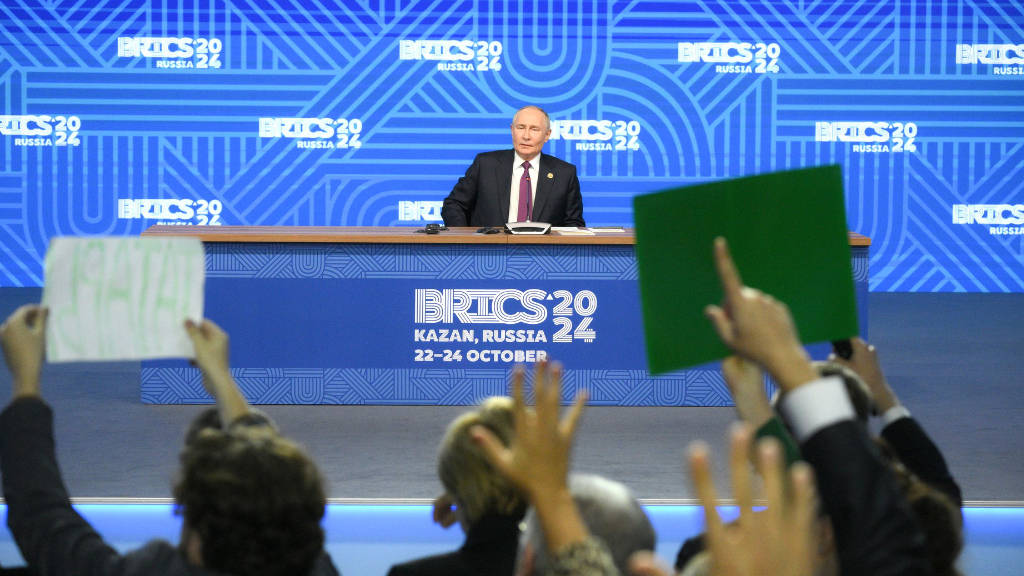
The Russian President Vladimir Putin has given a speech summarising the activities of the 2024 BRICS Heads of State summit in Kazan, followed by a Q&A session. We provide his speech first, followed by the Q&A. Questions are marked with Q, President Putin’s responses as VP, and our analysis as RPA.    

Speech

President Putin

“Ladies and gentlemen,

The 16th BRICS Summit has just concluded with great success. It marked the culmination of Russia’s chairmanship of the group and was one of the significant events on the global political calendar.

I have stated on numerous occasions that Russia has approached its BRICS chairmanship with full responsibility. Over 200 events were organised across thirteen Russian cities. Notably, numerous meetings of sectoral ministers took place, alongside various conferences, seminars, and the Business Forum. The Sports Games were also conducted very successfully.

This year, we have operated in the new expanded format and Russia as the group’s chair has made every effort to ensure that new nations join our family swiftly and seamlessly. In my view, we have succeeded in this endeavour.

The new countries have witnessed and understood that it is feasible to work and achieve results within BRICS. They have come to appreciate that the cornerstone of our group is mutual respect and obligatory consideration of each other’s interests. I can state with satisfaction that all of them are actively participating in working forums and are putting forward useful and promising ideas and initiatives.

Regarding the Kazan Summit itself, delegations from 35 countries and six international organisations participated in it, as you are already aware. Such broad representation clearly underscores the authority and role of BRICS, as well as the growing interest in cooperation with us from states that are indeed pursuing truly independent and sovereign policies.

Each of these countries has its own path of development, distinct models of economic growth, and a rich history and culture. It is obviously this civilisational diversity and unique combination of national traditions that underlie the strength and enormous potential for cooperation not only within BRICS but also within the broader circle of like-minded countries that share the group’s goals and principles.

The Summit’s agenda was quite extensive. BRICS countries have held meetings in narrow and expanded formats to discuss pressing issues of the group’s activities and prospects for expanding partnerships across three main areas: politics and security, trade and investment, and cultural and humanitarian exchanges.

Following our tradition, a BRICS Plus/Outreach-format meeting was held as well. This format has a proven track record and provides an opportunity for holding a direct and open dialogue between BRICS states and our friends and partners from the Global South and East. This year, Russia, as the current chair of BRICS, invited leaders from the CIS countries and delegations from many Asian, African and Latin American countries, as well as heads of executive bodies of a number of international organisations to attend this meeting.

We exchanged views on key international issues with a focus on the escalation in the Middle East. We also explored prospects for cooperation between BRICS states and countries from the Global South and East in the interests of inclusive sustainable development.

Most importantly, all sessions and events that I just mentioned took place in a traditionally business-like and open atmosphere fostering mutual understanding that is customary for BRICS. This constructive approach to joint work allowed us to conduct an in-depth discussion of a wide range of issues over the course of three days.

The Kazan Declaration which summed up the discussions was approved at the summit. It is a comprehensive conceptual document with a positive forward-looking agenda. Importantly, it reaffirms the commitment of all BRICS countries to building a more democratic, inclusive, and multipolar world order based on international law and the UN Charter. It also underscores our collective determination to oppose the practice of imposing unlawful sanctions and attempts to erode traditional moral values.

BRICS countries are committed to deepening partnerships in the financial sphere. We will continue to enhance interbank communication and to work on creating mechanisms for payments in national currencies that are immune to external risks.

During the Summit, we also discussed at length possible joint efforts to further stimulate investment in order to promote economic growth in BRICS states and countries of the Global South and East. We will engage, among other means, the New Development Bank led by its President Dilma Rousseff.

Russia proposed extending Brazil’s presidency and the presidency of Dilma Rousseff at this bank, since Brazil is presiding over the G20 this year, and next year it will take on the BRICS presidency. Let us face it, with the situation around Russia in mind, we believe this approach will help the institutions which we want to see developing further avoid challenges that are specific to Russia. We will manage these challenges effectively on our own.

There are promising prospects for bolstering sectoral cooperation and implementing new projects in industry, energy, logistics, high technology and many other key areas. Naturally, there is also potential for enhancing collaboration among our nations in the realms of culture, science, and sports, as well as through youth and civic organisations.

In Kazan, we reaffirmed that BRICS is not a closed format; it is open to all those who share BRICS values. The group’s members are prepared to work towards identifying joint solutions without external impositions or attempts to enforce narrow approaches upon anyone. BRICS is compelled to respond to the burgeoning demand in the world for such cooperation. Accordingly, we devoted particular attention to the matter of potential BRICS expansion through the establishment of a new category – that of partner states.

During these days, the leaders and members of the delegations engaged in numerous informal interactions. Many bilateral meetings, contacts, and discussions took place. Our delegation endeavoured to meet with leaders of the majority of the participating countries.

The Summit has now concluded. I wish to express my gratitude once again to all my colleagues, who travelled to Kazan, for their contributions to our collective efforts. I must highlight that their input was substantial.

Throughout our chairmanship, we have felt the vigorous support of our partners. This is crucial, particularly as it does not cease with the conclusion of the Summit. There are several significant joint undertakings to be completed before the year’s end. As I have previously stated, next year we shall pass the baton of chairmanship to Brazil. Naturally, we shall extend all necessary assistance to our Brazilian friends. We will continue to coordinate closely with all BRICS partners to further enhance cooperation within this framework.

Furthermore, I would like to express my sincere gratitude to the leadership of Tatarstan and the Kazan Mayor’s Office for their hospitality and efforts to create a conducive environment for our joint work.

I also wish to apologise to the residents of Kazan for any inconvenience they may have experienced, such as moving motorcades and the closure of certain highways. However, I assure you that these disruptions were not in vain. I am grateful to you for creating such favourable conditions for our work. Thank you very much.

If there are any questions, please feel free to ask.”

Q: Anton Vernitsky, Channel One.

“Mr President, could you please share the details about financial cooperation between BRICS countries? Was a common investment platform discussed? Was the creation of an alternative payment system, an alternative to SWIFT payment network, brought up?”

VP: “Speaking of SWIFT or alternatives to it, we are not creating any alternatives to anything, but settlements are, indeed, a critical issue which is why we are using our respective national currencies, which is a well-known fact. Regarding payment systems, we are using the Russian financial messaging system created by the Central Bank of Russia. Other BRICS countries also have their own systems, which we will also use, are already using and will continue to use. However, we are not inventing a separate common system, since we are doing well with what we have. All we need to do is take timely administrative decisions, which we also discussed with our colleagues, and we will continue down that path.”

RPA: We further elaborated on this issue in our article BRICS Pay Launches, Will Be A Global Payments Game Changer

Q: Ilya Yezhov, RIA Novosti.

“Mr President, the Kazan forum was the first summit for BRICS not as a five-member group but as a group with a broader geographic representation. Discussions about expanding it are underway, and your colleagues, including today, were clear about their willingness to work more closely with BRICS. The BRICS partner country format has been explored as well. Could you please share how this work is going and what is the key message that the Kazan Summit sent out regarding the further expansion of BRICS?”

VP: “I mentioned earlier that many countries are interested in joining this group. Thirty-five countries participated in the events in Kazan, and we agreed with our partners that we will approve a list of partner countries during the first phase of the potential expansion. This list has been agreed upon. Some countries that took part in the events held yesterday and today have submitted their proposals and requests for a full-fledged participation in the work of the BRICS group. Our next steps will be as follows: we will send out invitations and proposals to future partner countries for them to take part in our work in this capacity and, upon receiving positive responses, we will announce the countries on that list. It would be inappropriate to do so before we receive their responses, even though all these countries have previously filed requests.”

RPA: We have discussed the proposed new BRICS Partner country candidates in this article here.  

Q: Viktor Sineok, MIC Izvestia.

“It is known that the issue of the Ukraine conflict was raised during your numerous bilateral meetings. Could you please elaborate on the context in which you discussed the developments within the special military operation zone? In your opinion, how do the partners with whom you had discussions perceive this conflict, and did they express any support for our country?”

VP: “All the parties are in favour of resolving the conflict at the earliest opportunity, preferably through peaceful means. You may be aware that the People’s Republic of China and Brazil put forward an initiative at the General Assembly in New York. Numerous BRICS nations endorse these initiatives, and we, in turn, extend our gratitude to our partners for their attention to this conflict and their pursuit of methods to resolve it.”

RPA: We have discussed the BRICS position as concerns Ukraine in this article here. 

Q: Keir Simmons from NBC News.

“Mr President, satellite images are said to show North Korean troops are here, in Russia. What are they doing here and wouldn’t that be a massive escalation in the Ukraine war? And, Mr President, we are weeks away from US election. Russia again is accused of interfering, and that you have had private conversations with former President Donald Trump. Have you been speaking with him? And what have you been saying?”

VP: “Allow me to address the first part of your question. Images are a serious matter. If images exist, they indicate something. I would like to draw your attention to the fact that it was not Russia’s actions that precipitated the escalation in Ukraine, but rather the 2014 coup d’etat, supported primarily by the United States. It was even publicly disclosed how much financial support the then US Administration allocated towards preparing and orchestrating this coup. Is this not a pathway to escalation? Subsequently, we were misled for eight years with assurances that everyone sought to resolve the conflict in Ukraine through peaceful means, specifically via the Minsk Agreements. Later on, and I am certain you have heard this as well, several European leaders openly admitted that they had been deceiving us, as they had used that time to arm the Ukrainian military. Is this not the case? It is indeed. Further steps towards escalation involved Western countries actively arming the Kiev regime. What was the outcome? It led to the direct involvement of NATO troops in this conflict. We are aware of the actions undertaken and the methods employed when unmanned marine vehicles are deployed in the Black Sea. We know who is present there, from which European countries – NATO members they are, and how they conduct these operations. The same applies to military instructors, not mercenaries, but military personnel. This also pertains to the deployment of high-precision modern weaponry, including missiles such as ATACMS, Storm Shadow, and so on. Ukrainian servicemen cannot execute these operations without space reconnaissance, target indication and Western software – requiring the direct involvement of officers from NATO countries.

With regard to our relations with North Korea, you may be aware that the Treaty on Strategic Partnership was ratified, I believe, just today. It has Article 4, and we have never doubted the fact that the DPRK leadership takes our agreements seriously. However, it is up to us to decide what we will do and how we are going to do it, and we will act in accordance with this article. First, we need to hold talks regarding the implementation of Article 4. However, we will be in contact with our North Korean friends to see how this process unfolds.

In any case, the Russian army is acting confidently on all fronts, which is a well-known and undisputed fact. It is advancing on all sections of the frontline. Active operations are underway in the Kursk direction as well. A portion of the Ukrainian forces that invaded the Kursk Region, about 2,000 troops, has been blocked and encircled. Attempts are being made to break this group free from the outside and from within, but they have remained unsuccessful so far. The Russian army has begun an operation to eliminate this group.

With regard to contacts with Mr Trump, this issue has been making headlines for years now. At one point, Mr Trump and Russia were accused of being connected. However, after an investigation conducted in the United States, everyone, including US Congress, concluded that it was utter nonsense and that nothing of the kind ever happened. There were no contacts back then, and there are none now.

Russia-US relations after the elections depend primarily on the United States. If the United States is open to building normal relations with Russia, we will do the same. If not, so be it. This is up to the future Administration.”

RPA: In which Putin essentially states that North Korean troops are deployed in Russia although he doesn’t specify in what capacity. He compares that with undercover NATO troops being deployed in Ukraine and possibly in Kursk. As regards US media gossip about Trump, he is dismissive.   

Q: Pavel Zarubin, Rossiya TV channel.

“May I follow-up on your conversations with Mr Trump? The former US President, now a candidate for the US Presidency, has claimed that during one of his telephone conversations with you, he supposedly threatened to strike the centre of Moscow. Is there any truth to this assertion? Furthermore, is it possible to threaten you at all? Do threats have any impact on you? How do you perceive the fact that, in the current landscape of high-level politics, conversations between leaders are increasingly being exposed to the public domain, if that story is true? Additionally, if I may, a question regarding BRICS Summit: do you currently feel isolated? Do you perhaps miss engaging with your Western counterparts?”

VP: “Regarding the first part of your question, as to whether it is possible to use threats. Well, you can threaten anyone. However, it serves no purpose to threaten Russia, as it merely strengthens our resolve. I do not recall having such a conversation with Mr Trump. This is undoubtedly a very intense phase of the electoral campaign in the United States, and I would advise against taking statements of this nature too seriously. However, what Mr Trump has recently expressed, which I have heard, is his wish to do everything possible to bring an end to the conflict in Ukraine. I think he is sincere about that. Statements of this nature, regardless of their origin, are certainly welcomed by us.

You know, we receive various signals from our Western partners concerning potential contacts. We have not isolated ourselves from such engagements. When it is alleged that we refuse, or I refuse, to engage in conversations or maintain contacts, including with European leaders, I must clarify that this is untrue. We do not refuse, we have never refused, and we are not refusing now. If anyone wishes to restore relations with us, they are welcome to do so. We constantly repeat this, although we do not impose ourselves upon others.

As you can observe, we continue to live and work normally, and our economy is developing. Last year, our growth was between 3.4 to 3.6%. This year, it is projected to be around 4%. Meanwhile, the Eurozone’s economy is on the verge of recession. In the United States, there is growth, estimated at about 3.1 to 3.2%, which is not bad. However, they also face significant challenges, including deficits in three major areas: foreign trade deficit, payments deficit, and a huge debt, which, I believe, stands at US$34 trillion.

We, too, encounter challenges, but it is preferable that we refrain from disputes or conflicts and instead focus on how to address these issues collaboratively. This is precisely what we are doing within the BRICS framework.”

RPA: Putin distancing himself from anything related to Trump or the US elections, stating he is instead more focused on the Russian economy.  

Q: A journalist from Cameroon

“Our team is just back from Donbass. We are putting together a documentary to show how things really are in Donbass and to tell everyone what it means for Africa. We are aware of the fact that many African countries have fallen victims to terrorism and other destabilising actions. At the same time, we see Russia helping the Central African Republic and other Sahel countries. Before Russia’s involvement, other countries were present there, but only after Russia had come in the situation stabilised in many of these countries. So, my question is: is it not time for Russia to deepen this kind of partnership with African states not only in the military sphere, but in other spheres as well?”

VP: “I fully agree with you. This is the point of our cooperation with BRICS partner countries. Creating an investment platform within BRICS is precisely the goal of our efforts. We believe that in the near future – I have just spoken with my colleagues at the conclusion of today’s Summit – our experts suggest that the economies of countries like Russia, China, Saudi Arabia, and others will develop at a steady and positive pace. However, there are regions around the world where growth will go at a very fast pace. These are primarily South Asian and African countries. This is exactly why we, within BRICS, are addressing the issue of creating a new investment platform using the latest electronic tools. The goal is to create a system that could – surprisingly enough it is an achievable goal – be non-inflationary and to create proper conditions for investing in efficiently and quickly developing markets worldwide, especially in Africa.

Why do we think that? I believe many will agree with me. There are several reasons for that.

First, these countries are experiencing significant population growth. In Africa. Yesterday, I spoke with the Prime Minister of India. They have a yearly population growth of ten million people. That means ten million more people in India every year. Africa is growing rapidly as well.

Second, these regions of the world are less urbanised, but urbanisation will definitely ramp up, and both people and countries will strive to catch up with the living standards in other regions of the world, including Europe.

All of that, and some other factors, shows that growth rates, and capital accumulation will happen as well, and is already happening. All of this suggests that we should focus on these regions around the world.

In BRICS, are trying to create a working group at the BRICS New Development Bank in order to develop mechanisms for effective and reliable investment in these countries. I believe this will benefit everyone, including the investors and the recipient countries. New production facilities will be created, which will be efficient and ensure return on investment.

To achieve this, we need to create tools that are immune to external risks, especially those of political nature. I think we can do this. This is the path we will follow.”

RPA: An interesting question from an African war correspondent, which is unusual in itself. Putin uses the security and trade issue to highlight the importance of BRICS to Africa, and vice-versa. Putin is correct in that future growth is in regions such as Africa and is adamant that the BRICS is correct to engage with it. Paradoxically, this is at the same moment that European colonial influence in Africa is waning, meaning that BRICS is in the right place at the right time. A side element to this question not discussed is the African security aspect with Russia involved in troop deployments to maintain peace in several African countries following recent military coups and other political disturbances. Terrorism is also a problem, especially in the Sahel. An unanswered point is whether the Shanghai Cooperation Organisation, which is more security focused than BRICS, yet also includes China, India and Iran amongst others may yet in future play a communal role in African security or whether Russia will continue to dominate this aspect.

BRICS Invites 13 Partner States To Join: Full Details

Published on October 25, 2024

The BRICS countries have agreed to include 13 countries in the category of “Partner States” in the association. However, the entry of these countries has not yet been made official, as the newly established protocol in the procedure requires the country holding the current Chairmanship of the organisation (in this case, Russia, from 2025, Brazil) to hold consultations with the partner countries concerned.

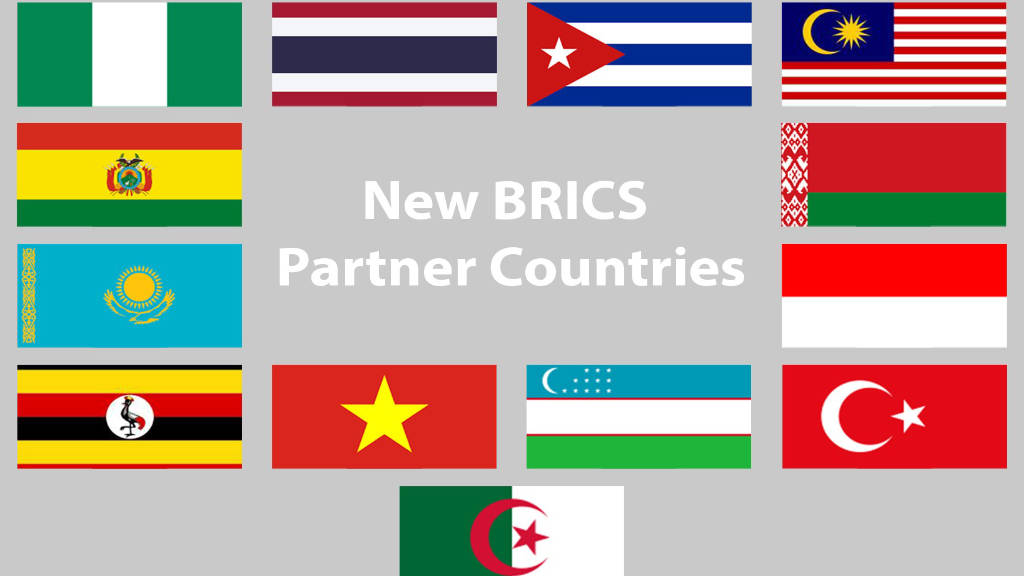
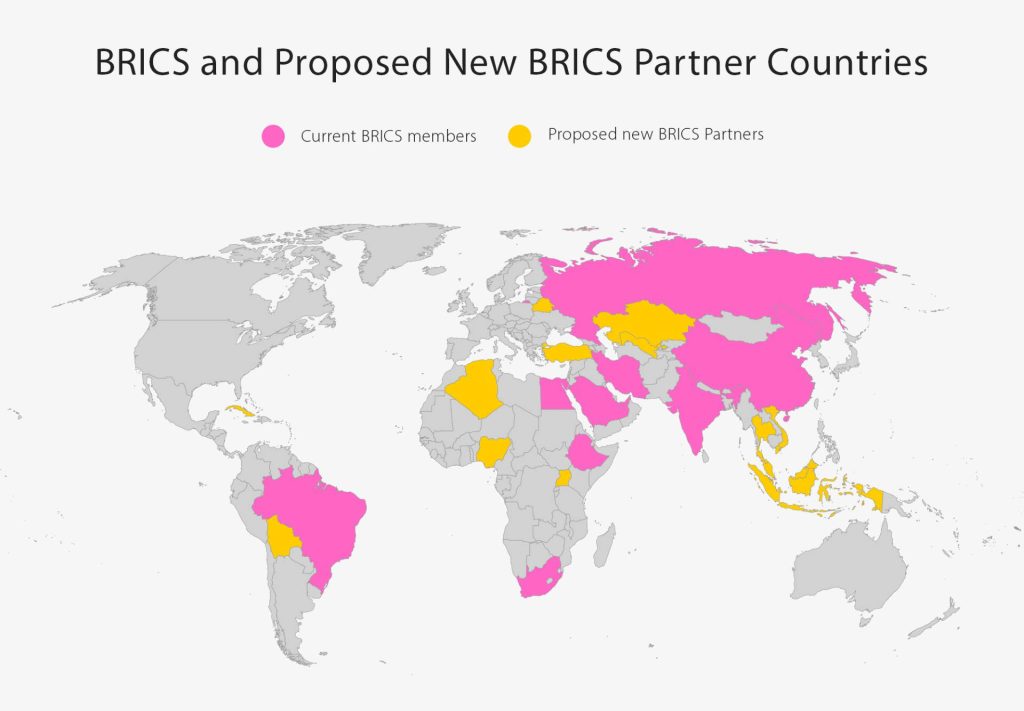
The new bloc of countries invited to join the BRICS as “Partner States” include Algeria, Belarus, Bolivia, Cuba, Indonesia, Kazakhstan, Malaysia, Nigeria, Thailand, Turkiye, Uganda, Uzbekistan, and Vietnam.

According to diplomatic sources from the Brazilian delegation in Kazan, Venezuela was left off the list due to a veto by Brazil. 

Brazilian Foreign Minister Mauro Vieira stated that the leading BRICS countries have reached a consensus on the ‘criteria and principles’ that will guide the bloc’s future expansion, stating that “Our discussion focused on the criteria and principles for future BRICS expansion. Currently, there are 10 member countries, but there will be more in the future. These principles and criteria have been discussed, approved, and agreed upon. Regarding the list of new members, consultations will begin soon. The Russian Chair will consult with each current member, and we will announce the countries, if not by the end of the year, then in 2025, when the responsibility will pass to the Brazilian Chairmanship of BRICS.”

BRICS Partner Countries Map

This is a brief introduction to each proposed new BRICS Partner Country:

Algeria

Algeria

Algeria is an oil-based economy and a member of OPEC, while its debt to GDP ratio is one of the lowest in the world at just 2%. It joined the BRICS New Development Bank and took an equity position in August this year. Algeria has the second-highest Human Development Index in continental Africa and one of the largest economies in Africa, due mostly to its large petroleum and natural gas reserves, which are the sixteenth and ninth-largest in the world. Sonatrach, the national oil company, is the largest company in Africa and a major supplier of natural gas to the European Union. The Algerian military is one of the largest in Africa, with the highest defence budget on the continent and among the highest in the world (22nd globally).  Regionally, Algeria is a member of the African Union, the African Continental Free Trade Agreement, the Arab League, the OIC, OPEC, and the Arab Maghreb Union. It has a population of about 47 million, a GDP (PPP) of US$768.52 billion, and a per capita GDP (PPP) estimated at US$16,483. 2024 GDP growth is expected to reach 3.8%.

Belarus

Belarus Flag

Belarus is a neighbouring country to Russia, also sharing borders with Latvia, Lithuania, Poland and Ukraine. It is a major agricultural economy and a significant global producer of agricultural produce, fertilizers and agricultural machinery. It is a member of the Eurasian Economic Union, Commonwealth of Independent States and the Shanghai Cooperation Organisation. Belarus has a population of about 10 million, a GDP (PPP) of about US$221 billion, and a per capita GDP (PPP) estimated at US$24,016. 2024 GDP growth is expected to reach 4%.  

Bolivia

Bolivia Flag

Bolivia borders fellow BRICS member Brazil to the north and is the largest land-locked country in South America. Seaport access is via Peru. Bolivia has the world’s largest lithium reserves, second largest antimony reserves, third largest iron ore reserves, sixth largest tin reserves, ninth largest lead, silver, and copper reserves, tenth largest zinc reserves, and undisclosed but productive reserves of gold and tungsten. Additionally, there are believed to be considerable reserves of uranium and nickel. Bolivia’s Lithium reserves make it a key source for future technologies, including semi and super-conductor production. Bolivia also has the second largest natural gas reserves in South America. It is a member of the Andean Community, and an associate member of Mercosur, with full incorporation pending. The Andean Community includes Colombia, Ecuador, and Peru, while Mercosur includes Argentina, Brazil, Paraguay, and Uruguay. Bolivia has a population of about 11.50 million, a GDP (PPP) of about US$125 billion, and a per capita GDP (PPP) estimated at US$10,340. 2024 GDP growth is expected to reach 1.6%.  

Cuba

Cuba Flag

Cuba is the second largest country in the Caribbean with a predominantly agricultural economy and underdeveloped industry. The share of mining and metallurgy in the gross industrial output of the country is small – about 3% of GDP. Development of deposits and mining of nickel ores is a significant part of the Cuban economy, as the largest reserves of nickel and cobalt on the North American continent are located on the territory of the country. Since 1962, the United States has imposed harsh sanctions against it. The country has been a strategic partner of both the USSR and Russia since the Cold War and remains partially dependent on Moscow. Cuba faces problems with outdated infrastructure, while Moscow uses it as a trading partner but also as a reminder to the United States that it can station unobserved nuclear submarines very close to U.S. territory. Russian tourism to Cuba is a growing market, with Russian tourist traffic continuing to increase in the fall. Cuba has trade agreements with Mercosur and Caricom, which also includes Antigua and Barbuda, The Bahamas, Barbados, Belize, Dominica, Grenada, Guyana, Haiti, Jamaica, Montserrat, Saint Kitts and Nevis, Saint Lucia, Saint Vincent and the Grenadines, Suriname, and Trinidad and Tobago. It is effectively the BRICS window onto the Caribbean. Cuba has a population of slightly over 10 million, a GDP (PPP) of about US$255 billion, and a per capita GDP (PPP) estimated at US$22,237. 2024 GDP growth is expected to reach 1.7%.    

Indonesia

Indonesia Flag

Indonesia is the world’s largest Muslim nation, and a multi-trillion-dollar economy in its own right. It is the only G20 member state in Southeast Asia and has the largest economy in the region. Services are the economy’s largest sector and account for 43.4% of GDP, followed by industry (39.4%) and agriculture (12.8%). Indonesia is the world’s largest producer of nickel. It is also a major Asian tourism destination, and especially to Bali. Indonesia is a member of ASEAN, which also includes Brunei, Cambodia, Laos, Malaysia, Myanmar, Philippines, Singapore, Thailand, and Vietnam. It also has free trade agreements with Australia, China, Hong Kong, India, Japan, South Korea, and New Zealand. Indonesia has a population of about 283 million, a GDP (PPP) of about US$4.66 trillion, and a per capita GDP (PPP) estimated at US$16,542. 2024 GDP growth is expected to reach 4%.       

Kazakhstan

Kazakhstan Flag

Kazakhstan is the largest country in Central Asia and serves as a land bridge between Europe and China. It is a major energy economy, with the second highest regional gas reserves (after Turkmenistan). Kazakhstan dominates Central Asia both economically and politically, accounting for 60% of the region’s GDP, primarily through its oil and gas industry; Major exports include crude oil and petroleum products (55.4%), refined copper and unprocessed copper alloys (5.2%), radioactive chemicals (4.6%), copper ores and concentrates (4%), and ferroalloys (2.8%). Kazakhstan is considered to be the largest uranium producer in the world, with 14% of the world’s proven reserves of this metal in the country’s subsoil. Other major exports include wheat, textiles, and livestock. Kazakhstan is a member of the Commonwealth of Independent States, Shanghai Cooperation Organisation, Eurasian Economic Union, the Organization of Islamic Cooperation, and Organization of Turkic States amongst others. Kazakhstan has a population of about 20 million, a GDP (PPP) of about US$693 billion, and a per capita GDP (PPP) estimated at US$34,534. 2024 GDP growth is expected to reach 3.9%.        

Malaysia

Malaysia Flag

Malaysia is centrally located in Southeast Asia, sharing land borders with Thailand and maritime borders with Singapore, Vietnam, and Indonesia. East Malaysia shares land borders with Brunei and Indonesia, as well as a maritime border with the Philippines and Vietnam. One of the largest economies in ASEAN, its service sector contributes over half of total GDP, the industrial sector 37.6%, tourism about 30%, and the agricultural sector about 8.8%. Malaysia is an exporter of natural and agricultural resources, and petroleum is a major export. Malaysia remains one of the world’s largest producers of palm oil. The country has developed into a centre of Islamic banking, while knowledge-based services are also expanding. In 2023, Malaysia exported high-tech products worth over $120 billion, the second-highest in ASEAN after Singapore. Along with its membership of ASEAN, Malaysia also has free trade agreements with Australia, Chile, China, India, Japan, New Zealand, Pakistan and Türkiye. Malaysia has a population of about 35 million, a GDP (PPP) of about US$1.3 trillion, and a per capita GDP (PPP) estimated at US$39,000. 2024 GDP growth is expected to reach 5%.         

Nigeria

Nigeria Flag

Nigeria is the most populous country in Africa and is considered a regional powerhouse. Nigeria’s economy is the fourth-largest in Africa, and is a significant regional energy play. The country has Africa’s largest, and the worlds’ ninth largest oil reserves, however the industry is somewhat disorganised. It is also developing NPP with China and Russia. Nigeria has an abundant supply of natural resources, including underexploited minerals such as coal, bauxite, tantalite, gold, tin, iron ore, limestone, niobium, lead and zinc. Despite huge deposits of these natural resources, the mining industry in Nigeria is still in its infancy. Nigeria also has a highly developed financial services sector, with a mix of local and international banks, asset management companies, brokerage houses, insurance companies and brokers, private equity funds and investment banks. Nigeria is a founding member of the African Union the African Continental Free Trade Agreement, and a member of many other regional organizations, including the Economic Community of West African States, Organisation of Islamic Cooperation and OPEC.  It has a population of about 231 million, a GDP (PPP) of about US$1.45 trillion, and a per capita GDP (PPP) estimated at about US$12,000. 2024 GDP growth is expected to reach 3.1%.         

Thailand

Thailand Flag

Thailand is another of the so-called ‘Asian Tigers’ with a significant economy, the second largest in ASEAN after Indonesia. Thailand has land borders with fellow ASEAN members Myanmar, Laos, Cambodia, and Malaysia, and shares maritime borders with Vietnam, Indonesia and India. It is an export manufacturing driven economy, with exports accounting for more than two-thirds of GDP. These include cars, computers, electrical appliances, rice, textiles and footwear, fishery products, rubber, and jewellery. The Thai automotive industry is the largest in Southeast Asia and the 9th largest in the world, although most of its production is sold under foreign marques. Thailand also serves as an anchor economy for the neighbouring developing economies of Laos, Myanmar, and Cambodia, and there is spill-over manufacturing into these countries. Thailand also has a significant tourism industry, being the most visited country in Southeast Asia. Compared to other ASEAN countries, Thailand is the largest importer of gas in weight, and it needs to continue this drive. The government has developed an Alternative Energy Development Plan which defines goals for the increase of renewable energy to almost 30,000 MW by 2037. In addition to its membership of ASEAN, Thailand also has Free Trade Agreements with Australia, Chile, China, Hong Kong, India, Japan, New Zealand, Peru and South Korea. Thailand has a population of about 66 million, a GDP (PPP) of about US$1.65 trillion, and a per capita GDP (PPP) estimated at about US$23,400. 2024 GDP growth is expected to reach 2.6%.          

Turkiye

Turkiye Flag

Turkiye is an upper-middle-income country and a founding member of the OECD and G20. Services account for the majority of GDP, whereas industry accounts for more than 30%, and agriculture contributes about 7%. It has a diversified economy; main industries include automobiles, electronics, textiles, construction, steel, mining, and food processing. Turkiye ranks 8th globally in crude steel production, and 13th in motor vehicle production, ship building (by tonnage), and annual industrial robot installation. It is also developing as a gas transit hub between Russia and Europe and has a significant tourism industry.  Turkiye ranks second in the world in terms of the number of international contractors in the top 250 list and is the fifth largest globally in textile exports. Turkish Airlines is one of the largest airlines in the world. Turkiye has a customs union with the European Union, and has Free Trade Agreements with Albania, Bosnia-Herzegovina, Chile, Egypt, Faroe Islands, Georgia, Israel, Kosovo, Malaysia, Mauritius, Moldova, Montenegro, Morocco, North Macedonia, Palestine, Serbia, Singapore, South Korea, Tunisia, Venezuela, the United Kingdom and the UAE.  Turkiye has a population of about 85.5 million, a GDP (PPP) of about US$1.34 trillion, and a per capita GDP (PPP) estimated at about US$40,300. 2024 GDP growth is expected to reach 3.2%.           

Uganda

uganda Flag

Uganda is a landlocked country and requires access to the Indian Ocean via Kenyan and Tanzanian ports, an infrastructure issue that has dampened its development. However, new rail and road connectivity should improve matters in coming years. At present, it is one of the poorest countries in the world, however, Uganda has abundant energy resources, including hydropower, biomass, solar, geothermal, peat and fossil fuels, and it has crude oil reserves totaling an estimated 95 million cubic metres. The Uganda–Tanzania Crude Oil Pipeline (UTCOP), also known as the East African Crude Oil Pipeline (EACOP) will be the first of its kind in East Africa and will connect Uganda’s oil-rich Hoima region with the Indian Ocean through the Tanga port in Tanzania. Otherwise, Uganda is a mainly agricultural-based economy, with products such as coffee, maize, tobacco, sugar and tea dominating. Uganda is a member of the Africa Continental Free Trade Area (AfCFTA). It has a population of about 50 million, a GDP (PPP) of about US$145 billion, and a per capita GDP (PPP) estimated at about US$1,500. 2024 GDP growth is expected to reach 6.6%.            

Uzbekistan

Uzbekistan Flag

Uzbekistan is a doubly landlocked country in Central Asia. It is surrounded by five countries: Kazakhstan, Kyrgyzstan, Tajikistan, Afghanistan and Turkmenistan. This means that connectivity issues are important for Uzbekistan, with new railways currently under construction to better link the country to Russia, China, and seaports in Pakistan.  The Uzbek economy is in a gradual transition to a market economy, with foreign trade policy being based on import substitution. Uzbekistan is a major producer and exporter of cotton. Thanks to its gigantic Soviet-era power generating capacity and vast natural gas reserves, Uzbekistan has become the largest electricity producer in Central Asia. Uzbekistan is a member of the Commonwealth of Independent States and the Shanghai Cooperation Organisation and is mulling membership of the Eurasian Economic Union. It also has a General System of Preferences (GSP+) trade agreement with the European Union, which has removed tariffs on two thirds (6,200 titles) of the product lines covered by GSP. Uzbekistan also has a trade agreement with Turkiye. It has a population of about 37 million, a GDP (PPP) of about US$492 billion, and a per capita GDP (PPP) estimated at about US$13,200. 2024 GDP growth is expected to reach 6%.             

Vietnam

Vietnam Flag

Vietnam is the third ‘Asian Tiger’ economy to be considered for ‘BRICS Partner’ status. A member of ASEAN, it is one of the two Marxist–Leninist states in Southeast Asia, and shares land borders with China, Laos and Cambodia. It has maritime borders with Thailand, the Philippines, Indonesia, and Malaysia. Vietnam has been a beneficiary of the ‘China Plus One’ concept, where rising costs in China manufacturing have seen many manufacturing investors relocate or partially relocate to Vietnam, which offers similar productivity levels but at lower cost. Vietnam has also become a major exporter of agricultural products, and is the world’s largest producer of cashew nuts, the largest producer of black pepper, and the second-largest rice exporter in the world. Vietnam is also the world’s second largest exporter of coffee. Apart from its ASEAN membership, Vietnam also has Free Trade Agreements with Australia, Chile, China, Hong Kong, India, Japan, Mexico, Peru, South Korea, and the United Kingdom, as well as with the Eurasian Economic Union, which includes Armenia, Belarus, Kazakhstan, Kyrgyzstan and Russia. Vietnam has a population slightly over 100 million, a GDP (PPP) of about US$1.6 trillion, and a per capita GDP (PPP) estimated at about US$15,500. 2024 GDP growth is expected to reach 6.8%.            

New BRICS Demographics 

These potential new ‘BRICS Partners’ would change the overall BRICS dynamics in terms of global influence. In total, this expanded BRICS would account for just under 43% of global GDP, compared with the G7’s 30%. In population terms, the new BRICS, if all the proposed BRICS Partners joined, would account for about 57% of the total global population, as opposed to 10% for the G7.

In terms of simple demographics, the emergence of what may become the world’s largest multilateral organisation will start to make multiple countries think about the developing, new geopolitical dynamics and the implications. At present, it appears the West is not aware. But with another 20 countries having also applied to join BRICS, and not yet part of the overall structure – change to global geopolitics and trade flows is almost certainly arriving. The 2025 BRICS summit will be held in Brazil, when both these developments and continuing new ones will almost certainly have manifested themselves. The world is changing faster than many people realise.

Further Reading 

BRICS 2024 Heads of State ‘Kazan Summit Declaration’ – Contents & Analysis

UAE Investment Fund Buys 6.86% Of Moscow Stock Exchange

Published on October 25, 2024

The UAE investment company Fundament Capital Investment Management has purchased 6.86% of the shares in the Moscow Stock Exchange (MOEX), acquiring them from the American State Street Bank and Trust Company.

MOEX said that Fundament Capital received 156,177,798 shares on September 30.

The main shareholders of Moscow Exchange are now the Bank of Russia (11.7%), Sberbank (10%), VEB (8.4%), Fundamental Capital Investment Management (6.86%) and the European Bank for Reconstruction and Development (5.3%).

MOEX is the largest stock exchange in Russia and has a market capitalisation of US$773 billion and represents 219 publicly quoted companies.  

Further Reading

China’s RMB Yuan Accounts For 99.6% Of All Forex Trade On The Moscow Stock Exchange

The 2024 BRICS Summit: What Was Said About Ukraine

Published on October 25, 2024

The 2024 BRICS summit has just finished, with the leaders of the attending countries issuing a ‘Kazan Declaration’. That document, which can be downloaded here contains clauses relating to global conflicts and can be taken to refer to Ukraine.

It states:

“We remain concerned about at the rise of violence and continuing armed conflicts in different parts of the world including those that have significant impact at both regional and international levels. We reiterate our commitment to the peaceful resolution of disputes through diplomacy, mediation, inclusive dialogue and consultations in a coordinated and cooperative manner and support all efforts conducive to the peaceful settlement of crises. We stress the need to engage in conflict prevention efforts, including through addressing their root causes. We acknowledge the legitimate and reasonable security concerns of all countries. We call for the protection of cultural heritage, particularly in regions affected by conflict, to prevent the destruction and illicit trafficking of cultural property, which is vital for preserving the history and identity of affected communities.”

While not directly addressing Ukraine, the text does refer to ‘addressing root causes’ in conflict resolution. That is a reference to the on-going situation in Ukraine, which initially began in 2008 when political upheavals removed the sitting President and inadequate democratic procedures resulted in a divisive government. In 2014, the Ukrainian regions of Donetsk and Luhansk oblasts, unsatisfied with their treatment by Kiev (these regions are ethnically and linguistically Russian) held referendums to claim independence. 96.2% voted for independence in a referendum that Kiev declared illegal. That sparked what amounted to a civil war between pro-Western Kiev and pro-Russia East Ukraine. This conflict, in which Kiev bombed its own territory and citizens, consistently worsened with OHCHR estimates that between 14,200 and 14,400 people, including civilians and military personnel, were killed in relation to that conflict from April 14, 2014, to December 31, 2021. Of them, at least 3,400 were civilians. Russia’s invasion of Ukraine was intended to stop this fighting and attacks upon civilians. Ukraine and the West explained the Russian moves as an invasion that was designed to threaten Europe. In September 2022, Russia annexed these regions and declared them part of Russia, although fighting is continuing. The differences in perceptions as to what actually occurred as opposed to what is being said is the driving force behind the phrase ‘addressing root causes’ when wanting to resolve conflicts.         

“We stress that tolerance and peaceful coexistence are among the most important values and principles for relations between nations and societies. In this regard, we welcome the adoption of Security Council resolution 2686 and other UN resolutions in this regard which enjoy consensual support of UN member states.”

The UN Security Council resolution 2686 (2023) was adopted to share good practices promoting tolerance and peaceful coexistence and address hate speech and extremism in a manner consistent with applicable international law. Full Member States were called upon to have regard to inter-religious and intercultural dialogue as an important tool to achieve peace, social stability and internationally agreed development goals. It also condemns the use of misinformation, disinformation and incitement to violence. While not expressly aimed at Ukraine, the mentioning of it in the Kazan declaration is an acknowledgement that the resolution has not been properly adhered to.    

“We reiterate the need for the full respect of the international humanitarian law in conflict situations and the provision of humanitarian aid in accordance with the basic principles of humanity, neutrality, impartiality and independence established in UNGA resolution 46/182.We call on the international community to seek collective answers to global and regional challenges and security threats, including terrorism. We stress the need to abide by the purposes and principles of the UN Charter. We reiterate that differences and disputes between countries should be resolved peacefully through dialogue and consultation. We also underline the need to respect the legitimate and reasonable security concerns of all countries. We underscore the need for full, equal and meaningful participation of women in peace processes including in conflict prevention and resolution, peacekeeping, peacebuilding, post-conflict reconstruction and development, and sustaining peace.”

The UN General Assembly resolution 46/182 refers to “Strengthening of the coordination of humanitarian assistance of the United Nations”. It outlines a framework for humanitarian assistance and a set of guiding principles. The Kazan Declaration refers to the need for this to be implemented as well as to provide fully inclusive participation in peace processes. This is a general statement but can be illustrated by Ukraine’s refusal to negotiate with Russia and going so far as to pass laws making it a criminal offense to negotiate with the Russian President and Russian government. In short, the BRICS are saying that such stances are not helpful when trying to find peaceful solutions.   

We mourn the tragic loss of civilian lives in the recent period and express sympathy with all civilian victims and their families. We call for urgent measures, in accordance with international law, to ensure the protection of lives.

We recall national positions concerning the situation in and around Ukraine as expressed in the appropriate fora, including the UNSC and the UNGA. We emphasize that all states should act consistently with the Purposes and Principles of the UN Charter in their entirety and interrelation. We note with appreciation relevant proposals of mediation and good offices, aimed at a peaceful resolution of the conflict through dialogue and diplomacy.”

The BRICS group, including Russia, have effectively called for UN charter standards to be applied directly to the Ukraine conflict, which means that decisions should be made by the collective United Nations as concerns both the conflict, and its resolution. At present the conflict is being managed by a coalition of the United States, European Union and the United Kingdom and has entirely bypassed the United Nations. It is interesting to note that Russia, which also signed off on the Kazan Declaration, is willing to accede to UN directives, while Ukraine and its allies are not.     

What Ukraine Has Said

Ukraine has immediately condemned the Kazan Declaration and the BRICS. Its Foreign Ministry stated that “The BRICS summit, which Russia planned to use to split the world, has once again demonstrated that the world majority remains on the side of Ukraine in its quest to guarantee a comprehensive, just and sustainable peace.”

These comments have been widely reported amongst Western media (reference the point made earlier about UN Security Council resolution 2686) with most analysis taking Kiev’s viewpoint.

However, others differ. Indian Prime Minister Modi, who actually attended the summit, stated “This Summit was special because we welcomed the new BRICS members. This (BRICS) forum has immense potential to make our planet better and more sustainable.“

The Russian Duma (Parliament) Speaker, Vyacheslav Volodin merely said that the event illustrated that the West “had failed to isolate Russia.” 

The UN Secretary-General, who was also present at the BRICS summit said “I salute (BRICS) valuable commitment and support for multilateralism and international problem solving.”

There was also some negative commentary from Kiev and the West about why the BRICS hadn’t focused more on Ukraine. Dmitri Peskov, the Kremlin’s spokesman said “Because it is not the central issue for the BRICS. Not at all. Yes, this is an important issue of the Russian agenda, but it is far from being the central issue for the BRICS. And this was reflected as it was supposed to be on the BRICS agenda.“

Ukraine’s claim that it retains most of the world’s backing however is also somewhat disingenuous, as it really depends upon which world one is referring too. The G7 for example, which is pro-Ukraine and includes most of its supporters, represents 10% of the global population. The BRICS represents 45%.

Upcoming Article:

The Global Economic and Trade Implications of the Kazan Declaration   

To secure your complimentary subscription to Russia’s Pivot to Asia, please click here.

To subscribe to our X (Twitter) feed, please click here.

Further Reading

BRICS 2024 Heads of State ‘Kazan Summit Declaration’ – Contents & Analysis

BRICS 2024 Heads of State ‘Kazan Summit Declaration’ – Contents & Analysis

Published on October 24, 2024

The 2024 BRICS summit has concluded with a ‘Kazan Summit Declaration’, with 134 points covering 43 pages. The key topics include further development of the association, position on various global issues, sanctions, settlement of regional crises, including in Ukraine and the Middle East, in addition to a comprehensive reform of the United Nations (UN), including its Security Council.

These are the main points:

The United Nations

The BRICS Heads of State expressed their support for comprehensive reform of the United Nations, including its Security Council, with the aim of making it more democratic, representative, and effective. They also emphasized that the UN should play a key role in the global management of artificial intelligence. The UN Secretary-General was present at the BRICS summit, which we discussed here. We also discussed Russia’s plan for UN security council reforms here.   

Sanctions

The BRICS Heads of State condemned politically motivated unilateral sanctions that undermine other countries’ development. This situation affects multiple countries and is not just limited to Russia. Full BRICS members China, (and Hong Kong), Ethiopia, and Iran, in addition to BRICS friendly nations such as Afghanistan, Belarus, Cuba, DR Congo, Iraq, Lebanon, Libya, Mali, Myanmar, Nicaragua, Sudan, South Sudan, Syria, and Venezuela are all currently subjected to US sanctions. They expressly stated that “We are deeply concerned about the disruptive effect of unlawful unilateral coercive measures, including illegal sanctions, on the world economy, international trade, and the achievement of the sustainable development goals. Such measures undermine the UN Charter, the multilateral trading system, the sustainable development and environmental agreements. They also negatively impact economic growth, energy, health and food security exacerbating poverty and environmental challenges.”    

Conflicts

The BRICS leaders expressed concern about “the rise of violence and continuing armed conflicts in different parts of the world including those that have significant impact at both regional and international levels.” They reaffirmed their “commitment to the peaceful resolution of disputes through diplomacy, mediation, inclusive dialogue and consultations in a coordinated and cooperative manner.” That in part is a reference to previous Ukrainian-led ‘peace summits’ which have excluded Russia, and is now seen as non-viable. . The Kazan Declaration did not formulate any specific opinion about the Ukraine conflict, although there were veiled references to Ukraine being unwilling to discuss any type of peace process with Russia. 

The BRICS leaders also expressed concern over the escalation in the Middle East, and were especially concerned with the recent Israeli attack on the Iranian embassy in Damascus. The terrorist attack on Lebanon involving the use of communications equipment, including pagers, was also condemned.

The leaders supported the establishment of the sovereign State of Palestine within the internationally recognized 1967 borders and its admission to the United Nations.

The BRICS countries “noted with satisfaction” the various Chinese, Turkish and Russian proposals to settle the Ukrainian conflict, and noted national sovereignty and security positions on the issue. This implies that a political and security consensus amongst non-European countries is being arrived at in terms of settling the Ukraine conflict.

Combatting Terrorism

The BRICS countries strongly condemned terrorist attacks on cross-border energy infrastructure and called for unbiased investigations. The leaders opposed the politicization of cooperation in combating transnational crime. The former is a reference to the unsolved explosions, and Western lack of investigative cooperation, in the explosions that destroyed the German Nordstream pipeline off the coast of Denmark and Sweden in the Baltic Sea.    

Iran Nuclear Deal

The BRICS leaders called for the revival of the Joint Comprehensive Plan of Action (JCPOA) on Iran’s nuclear program, which the United States has so far rejected under Israeli objections.

Global Economy

The BRICS nations advocated reform of the Bretton Woods institutions by enhancing the contribution of developing countries to the world economy. They endorsed an open and fair multilateral trade system with a central role for the World Trade Organization (WTO) providing a special regime for developing countries.

The BRICS countries supported the Russian initiative to establish a Grain Exchange to cover other agricultural sectors in the future.

The leaders called on developed countries to fulfill their obligations to help nations in need.

The BRICS countries also agreed to discuss and study the possibility of establishing an independent cross-border BRICS Clear settlement and depository system.

Summary

It is still early to comment on some the implications over what has transpired at the BRICS summit although no doubt further details will emerge. The final point, concerning the ‘BRICS Clear’ settlement and depository system is well worth immediate attention, as this implies the creation of a BRICS Central bank. We discussed the potential for the BRICS New Development Bank to undertake this role here yet see it as an unlikely candidate given its existing role. If correct, this suggests that further financial institutional development within the BRICS bloc may well be imminent.  

Russia’s Pivot To Asia have made the complete Kazan Declaration available as a complimentary PDF file that can be downloaded here

To keep in touch with the latest developments please either subscribe to our complimentary weekly round up here and follow us on X (Twitter) here.

We will provide a detailed analysis of the complete contents of the Kazan Declaration shortly. 

Further Reading

BRICS Pay Launches, Will Be A Global Payments Game Changer

BRICS, Russia and Turkiye:  2024 Developments and Implications

Published on October 24, 2024

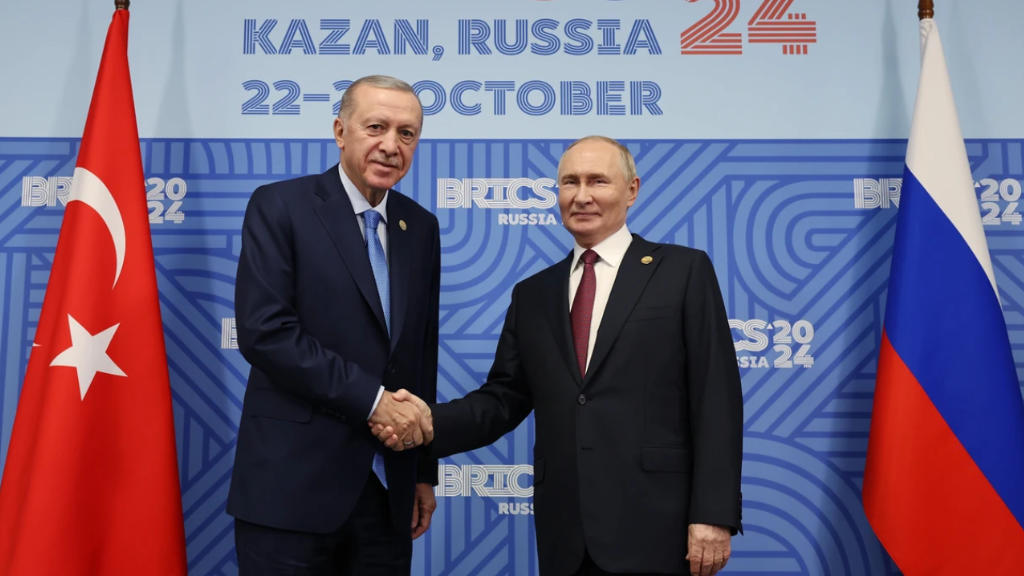
Vladimir Putin has met with Recep Tayyip Erdogan, the President of Turkiye at the BRICS Summit in Kazan.

This is what they had to say:

Putin:

“Once again, I would like to welcome everyone to Kazan and to repeat how much I appreciate it that you have accepted the invitation to attend the BRICS Plus/Outreach meeting. I know that Turkiye is interested in establishing closer cooperation with the group, and we see great opportunities here, given your country’s international influence and unique geopolitical role to connect the eastern and western parts of Eurasia.

Russian-Turkish relations are of a good-neighbourly and constructive nature, rooted in a long-standing history of partnership across a wide range of areas. You and I maintain a regular dialogue on current issues on both bilateral and international agendas. I highly value these consistently beneficial interactions. I am confident that our conversation today will be both fruitful and useful.

Naturally, we will discuss ways to enhance trade and economic cooperation, which has been developing very steadily year by year. For instance, last year, the volume of trade was an impressive US$55.4 billion and from January to August this year, this figure rose by a further 6.2%.

We have accumulated a substantial volume of cross-investments: Russian companies are implementing major projects in such sectors of the Turkish economy as metallurgy and the automotive industry. Turkish business is prominently represented in machine-building, metallurgy, and woodworking, with the most of your investments and investment projects concentrated here, in Tatarstan, where we are today.

Strategically significant ties have been established in the energy sector. Russia is a reliable, time-tested supplier of natural gas to Türkiye. Last year, 20.5 billion cubic metres were exported through the Blue Stream and Turkish Stream pipelines.

Preparations are ongoing for the implementation of our initiative to create an international gas hub in Türkiye. I am confident that it will significantly enhance regional energy security, primarily through more balanced pricing mechanisms.

The flagship joint project is the construction of Akkuyu, Türkiye’s first nuclear power plant. Work is being conducted simultaneously on all four power units around the clock. We anticipate that as early as next year, the plant will begin supplying electricity to the energy system of Türkiye, as you have stated, and as you have tasked the constructors.

Tourism has traditionally held a special place in our bilateral relations. In 2023, a record 6.3 million Russian tourists visited Turkiye, up 20.7% on the year. From January to August this year, over 4.5 million people visited Turkiye, an increase of 4.6%. Russia ranks first in Turkiye in this regard.

Close cooperation between our respective rescue services is particularly notable. At your request, we also took part is suppressing wildfires in Turkiye and used our aviation in the process.

Without a doubt, your participation in this event will convey the weighty role Turkiye plays in addressing pressing global issues. Tragic developments in the Middle East are the most pressing item on the international agenda. Russia’s and Turkiye’s principled positions on these matters are very close, and we both believe that a lasting political and diplomatic settlement of the Arab-Israeli conflict can only be based on the universally recognised two-state solution approved by the UN Security Council.

As usual, we will discuss regional issues that are of special importance to our countries, including the Syrian peace process and normalisation of the situation in the South Caucasus. Of course, I am ready to inform you about the situation surrounding the Ukrainian crisis.”

Erdogan:

“Mr President, my dear friend,

Thank you for inviting me to the BRICS Summit in expanded format. It is a great pleasure for me to see you again after our meeting in Astana.

Your Foreign Minister was in Istanbul last Friday as part of the 3+3 Regional Cooperation Platform. We hope to see you also in our country soon.

Efforts to resolve issues in banking transactions between our countries are underway. In this regard, our respective treasuries and finance ministries as well as our central banks, continue to collaborate. Our ministers of trade are also working on it.”

Analysis & Implications

Turkiye has formally applied to join BRICS as a full member, and it is significant in Putin’s BRICS expansion tactics that the Kazan summit is being held in what is the ethnically Turkic, yet Russian Republic of Tatarstan, which has ties going back to Turkiye for thousands of years. Yet Turkiye remains somewhat conflicted. It is a member of NATO, has close ties to Europe and will be wary of committing itself immediately to a bloc that in some Western eyes, is considered competitive if not outwardly confrontational. Should Turkiye join, there will be immediate political blow back and Erdogan is well aware of what this could mean. The country therefore is at a crossroads, and Erdogan may well take his time to ponder his next geopolitical move. It will be a measure of Turkish dissatisfaction both with the EU and with NATO as to how fast – or slow – such a decision is taken.

That said, Turkiye is a regional power and Erdogan knows it. Putin accurately described Turkiye as a bridge between East and West, while Erdogan must maintain a balance between both. Neither are relations between Moscow and Ankara always especially warm – ambitions of both as regards the future of Syria and Iraq do not always match. There is mutual respect, but no ‘special relationship’ between the two countries. Traditionally, significant corporate vested interests in Turkiye have pointed towards Europe, and the countries boardrooms need to evolve to accept that looking East may be a better option.

Trade, therefore, and cultural exchanges are becoming key in this Bosphorus dance. And here, new, mutually beneficial alliances are starting to be drawn. Putin mentioned the Blue Stream and Turkish Stream pipelines. The Blue Stream is a direct link between Russia and Turkiye, the Turkish stream a direct route between Turkiye and Europe. This means that while EU politicians claim they do not wish to buy Russian gas, in fact Turkiye acts as the middleman between the two. It is the twisted mirror of EU politics that says that energy is not being sourced ‘directly’ from Russia. The cost to the European consumer, given Turkiye now acts as a middleman, is increased. But that is neither a concern for either Moscow nor Ankara: it is not their problem. It is also representative perhaps of this new Turkish role – a bridge between Europe and Asia – and taking a cut both ends.

Russia has also suggested it is prepared to invest in Turkiye – principally its Azov and Black Sea regions – to develop Russia-Turkish logistics hubs to reach out to other markets.

Cultural ties are also growing, with the Turkish population becoming increasingly used to Russian tourists, a soft power issue that also helps develop ties. Russian tourists, now unwelcome in Europe, have become the largest source of inbound tourism for Turkiye and an important revenue stream for the country. 

Naturally, there has been Western interference. Washington threatened Ankara with financial sanctions after Turkiye had agreed to accept Russia’s MIR card system in the country. As a result, the service was suspended, meaning that US sanctions effectively applied to Russian tourists, and cut off Turkish businesses from Russian expenditure. It hasn’t stopped the tourist flows however, as Russians simply bring cash. It has also created another wave of mistrust between both Turkiye and the United States and the average Russian wanting to go on vacation and now forced to carry banknotes. It has also resulted in a huge, and competitive, Rubles-Lira black market. This is why Erdogan stated he wished to resolve the financial sanctions issue and had bought teams of Turkish bankers to discuss these problems and find solutions.           

The path ahead for Turkiye is quite clear, yet politically the country remains unsure. BRICS partner status may be a compromise as Erdogan, Ankara, and Turkiye’s embedded corporates determine how Western, and how Eastern, the future of the country is going to be. There will need to be an internal, collective recognition of the need to adapt. 

Further Reading

Russia-Turkiye 2024 Relations: BRICS, Black Sea and US$100 Billion Trade Discussions

BRICS, Russia and Venezuela:  2024 Developments and Implications

Published on October 24, 2024

Vladimir Putin has met with Nicolas Maduro, the President of Venezuela at the BRICS Summit in Kazan.

This is what they had to say:

Putin:

“I am delighted to see you in Russia again. I remember well our previous meeting in Moscow in 2019. I am glad that you were able to come to Kazan and personally participate in the BRICS Summit.

I know that our Venezuelan friends hold values and principles that are similar or overlapping with those BRICS is guided by: respect for each other’s legitimate interests and sovereignty, the sovereign choice of nations, mutually beneficial and honest equitable cooperation, and so on. We support your decision to participate in BRICS activities.

Venezuela is one of Russia’s longstanding and reliable partners both in Latin America and in the world. The strategic partnership between our countries is still evolving, and our mutually beneficial cooperation is progressing in all areas. Bilateral trade is growing too, we have numerous projects in the works in energy, pharmaceutical industry, transportation, civilian space activities, and high tech.

It is good to have this kind of package of projects for cooperation, but it will be even better if they make progress. Some of them are underway, which is good news.

It is also important to establish ties in the financial and banking spheres based on settlements in national currencies.

Direct flights have been established between our countries. This facilitates the growth of tourism and encourages cultural, humanitarian, research and educational exchanges. Russia and Venezuela coordinate their steps at the UN and other international platforms.

Together, Russia and Venezuela are striving to create a new, more just world order based on the rule of law and zero tolerance for neo-colonialism, interference in the internal affairs of other states, political and financial pressure, and unilateral coercive measures.

We appreciate that Venezuela shares our stance on the current international situation and consistently supports us in the face of the hybrid war and the Russophobia campaign being waged against our country.

We know how you are defending the interests of your people, Venezuela’s interests in your country, consistently and uncompromisingly. We are definitely on your side and strongly support your efforts in this area.”

Maduro:

“Thank you very much for the invitation to attend this historic BRICS Summit.

Venezuela follows the path of BRICS, and we are committed to achieving balance in the world, a commitment that traces back to the times of Bolivar. We uphold the legacy of Comandante Hugo Chavez, who endeavoured to create a multipolar, multi-centred world. We are implementing the BRICS principles because they align with our conviction: the Global South can only exist if it possesses the right to a future, the right to freedom, and the right to justice.

It is only in the 21st century – the century of change, the century of the birth of new geopolitics – that such emerging powers as China, Russia, and India can develop relations based on cooperation and respect with the peoples of the Global South and the Global East. We are all brother nations. I congratulate you on the success of this historic summit; it serves as an important message of hope for the entire world.

Russia and Venezuela have established ties that cannot be broken – political ties, moral ties, relationships that have withstood the test of time over all these years. We have traversed the desert.

Yesterday, upon landing here in Kazan, I remarked: we have arrived, we are standing on our feet, we are intact, and we have achieved victory – the people of Venezuela have achieved victories, and we are monitoring the struggle that Russia is waging against Nazism and fascism.

We also admire the victories you have secured for the Russian people on all fronts of the global struggle – be it economic, scientific, cultural, military, political, or diplomatic. Consequently, we take pride in the fact that you are our friends, that Russia is a friend of Venezuela, and we are prepared to continue advancing together.

There will be a meeting of the Russian-Venezuelan Intergovernmental Commission on November 7. We have an extensive agenda and are making progress in numerous areas. Venezuela has managed to restore its economy through its own efforts. We have very positive economic growth indicators and have successfully defeated inflation. We have investments, and we are prepared to continue welcoming Russian investments in our country, with the aim of further developing our trade, strengthening relations across various sectors of our economy, and enhancing our political relations with the great Russia.

I congratulate you once again on the success. Our entire delegation stands ready to continue making progress in all areas of cooperation.”

Analysis & Implications

Like Russia (and Iran), Venezuela has been heavily sanctioned by the United States. However, Venezuela has the world’s largest oil reserves, and ninth largest gas reserves. (It is worth noting that the United States routinely sanctions or engages in conflicts with countries possessing significant energy reserves). While Russia-Venezuela bilateral trade is relatively small at about US$3.6 billion in the non-oil sector, this is increasing. Total bilateral trade is worth about US$7.5 billion, with Russia also investing in Venezuela’s energy sector. Russia also exports grain to Venezuela, while in return, Venezuela exports agricultural products, including coffee.

In 2021, the two governments signed a 10-year plan to set up long term cooperation in several areas, including healthcare, energy, communications and agriculture.

The main issue with Venezuela is that like other countries such as Iran, and Russia itself, it is a major energy play. Pressure from the United States over democratic issues that Maduro stated amounted to interference in Venezuelan sovereignty, resulted in threats to cancel all Venezuelan oil contracts with US companies and award them to BRICS nations.

That sort of rhetoric will sit well with Putin, and we can expect Venezuela to become an official member of BRICS very soon.

The BRICS countries currently control about 43% of global oil reserves. Adding countries such as Venezuela to that mix will significantly increase that.

Further Reading

Kaliningrad Exports Wheat To Venezuela For The First Time

BRICS, Russia and Iran: 2024 Developments and Implications 

Published on October 24, 2024

Vladimir Putin has met with Masoud Pezeshkian, the President of Iran at the BRICS Summit in Kazan.

This is what they had to say:

Putin:

“This visit to Russia is your first as President of the Islamic Republic of Iran, and this has great symbolic importance. Iran has become a full participant of BRICS, and you know that we strongly supported your application. Earlier, we also vigorously promoted your accession to the Shanghai Cooperation Organisation. This has given us additional opportunities for cooperation in the international arena.

Recently, we had a very substantive and useful meeting in Ashgabat, where we reviewed the main aspects of bilateral cooperation and the most relevant regional issues. Most importantly, we reaffirmed our policy of mutually strengthening ties in every possible way. Our interaction is on the rise; it is genuinely friendly and constructive. Soon we will be able to consolidate the results achieved with a new major interstate agreement on comprehensive strategic partnership between Russia and Iran.

We are grateful to you for accepting the invitation to pay a separate visit to our country to sign this document and other important documents in a ceremonial atmosphere.

As I said in Ashgabat, one of our priorities is to consolidate the emerging positive trends in trade and economic cooperation. We expect this issue to be addressed by the intergovernmental commission, chaired by our Minister of Energy, Mr Tsivilev, and Iranian Minister of Petroleum Mohsen Paknejad.

Other priorities include the implementation of major joint initiatives such as the development of Iranian railway infrastructure as part of promoting a major project, the International North-South Transport Corridor project, as well as the construction of the second and third power units at the Bushehr NPP.

The Free Trade Agreement signed between Iran and the Eurasian Economic Union at the close of 2023 significantly contributes to the expansion of economic ties.

Cultural and humanitarian cooperation is likewise making good progress. Notably, an intergovernmental agreement concerning the establishment and operation of cultural centres came into effect in July of this year. Moreover, the visa-free regime for organised groups of tourists, operational since August of the previous year, is actively fostering an increase in mutual tourist exchange – a 52% growth was observed in 2023.

Today, we will continue our discussions on the most pressing international issues, including the dramatic developments in the Middle East, as well as the situations in Syria and the South Caucasus.

Generally speaking, I would like to emphasise that the approaches of Russia and Iran towards the global agenda are closely aligned or fully coincide. We are united by a shared aspiration to establish a just multipolar world order, to uphold international norms, and to maintain the pivotal role of the United Nations.

I would also like to take this opportunity to extend my greetings and best wishes to the Supreme Leader of Iran, Ayatollah Seyyed Ali Khamenei. We hold in high regard his attentive and constructive approach to the development of Russian-Iranian relations.”

Pezeshkian:  

“I express my gratitude for your invitation to visit Kazan. I am very pleased to have this opportunity to meet with you.

As you mentioned, we had a very productive meeting in Ashgabat, during which certain agreements were reached. I have assumed personal oversight of the implementation of these agreements and have just spoken with my colleagues and ministers to finalise at this meeting matters left by the previous Government of Iran. If necessary, I will personally attend to this matter once again to ensure that all agreements and documents are signed at the earliest possible opportunity.

Our relations are of a strategic nature – it is in the interests of our nations to advance together. Our esteemed neighbour, Russia, is a great country.

We must continue our constructive collaboration within the BRICS framework. With your support, we have a Free Trade Agreement with the EAEU, and have joined the SCO, and BRICS, for which we are sincerely grateful. We will undoubtedly and actively continue along this path.

I believe that today’s discussions are also aimed at comprehensive cooperation with BRICS countries.

I am confident that we will be able to neutralise all the sanctions the United States has imposed on us, on you and us, and we shall be able to straighten out all the processes they are attempting to disrupt.

Our relations across various spheres – economic, political, and cultural – are developing exceedingly well. I am certain that we will soon be able to sign the treaty. At the earliest opportunity, we shall finalise this issue; we shall agree on this matter. I believe that the date for the signing of this treaty will soon be determined.”

Analysis & Implications

Pezeshkian actually met with Putin only a few days ago, holding discussions in Moscow that we highlighted here. That contains details of bilateral trade and statistics.

Like Russia, Iran has been heavily sanctioned by the United States and European Union, mainly due to developing Nuclear Power Plants (NPP) to drive its economy. Israel objects saying that the true objective is to develop nuclear weapons and to attack it. The stand off does have regional implications – it means that without NPP, Iran cannot export electricity much needed in neighbouring Pakistan – whose Baluchistan Province is amongst its poorest and as a result, prone to civil unrest and terrorism. Sanctions have also significantly hindered the Iranian economy, which given its relatively educated population of 92 million and significant oil and gas reserves (the world’s second largest gas reserves, and third largest oil reserves) ought to be a wealthy country. Instead, its GDP is just US$382 billion.

The only way out of this predicament for Iran is both patience and allegiance to groups such as BRICS. Pezeshkian would have been keen to discuss trade with other BRICS members – and Iran already has close relations with China, its main client.

Of significance however in this meeting were the references to the ‘Russia-Iran Comprehensive Strategic Partnership’, a long-discussed document that would secure mutual trade and investment between the two countries for 20 years. In a nutshell, this agreement cements long term relations in military support, trade and agriculture.      

The anticipated agreement would usher in a new chapter in Russia-Iran relations, deepening their strategic and economic ties at a critical moment when both nations face increasing isolation from the West. This partnership underscores a shared commitment to countering Western influence, and the sweeping sanctions that have followed. Since 2022, there has been a notable increase in Russian-Iranian cultural, educational, and economic exchanges, largely in response to the unprecedented global isolation imposed on both nations.  

The two countries are key allies in bypassing Western sanctions. In 2023, Russia became the largest foreign investor in Iran, accounting for roughly two-thirds of its total FDI. Joint projects have been developed in the oil and gas sector, as well as in energy and logistics; Russia supplies Iran with grain and oilseed, lumber, inorganic chemicals, machine-building equipment, paper and cardboard, and measuring instruments.  In turn, Iran has exported vegetables and fruits, nuts, dairy products, plastics, ferrous metal products, building metals, and plumbing products to Russia. New collaborations have also begun to crop up.  On June 26, 2024, Gazprom and the National Iranian Gas Company signed a strategic memorandum on the prospects for a Russian natural gas pipeline to Iran.

Russia has also worked with Iran to develop alternative financial systems and circumvent the use of the U.S. dollar in their transactions. In the first quarter of 2024, a currency agreement was signed between Iran and Russia, allowing the two to trade in both Rubles and Rials. Sberbank and Bank Melli, the largest banks in Russia and Iran, each agreed to open credit lines for 6.5 billion rubles, and a pilot project in accepting payment by cards using the Russian ‘Mir’ system has also been launched in Iran. Moreover, Hossein Eivazloo, Deputy Director of Foreign Investment at the Iranian Development Fund, revealed plans for Iranian and Russian national wealth funds to build joint investment committees. Various projects will be realized in oil, gas, petrochemicals, high-tech, and pharmaceuticals.

The two states have also worked together to develop their military and defense strategies and capabilities, despite the wide range of sanctions levied against them. Iran has supplied Russia with thousands of Shahed drones, Iranian military officials have trained Russian soldiers on the use of the drones, and the two countries are working together to construct a drone factory in Russia.  In January, Iran also confirmed an order for the purchase of Russian Su-35 fighters, as well as other military equipment, including helicopters and missiles. In November 2023, Iranian deputy Defense Minister Seyyed Mehdi Farhi said that a deal had been struck on the purchase of Russian MI-28 attack helicopters, SU-35 fighters, and Yak-130 combat training aircraft. Deliveries have already begun. 

Putin has already ordered that the agreement be signed off by the Russian government. At present though, Pezeshkian is still relatively new in his position, while Iran is in an extremely delicate position as concerns Israel and does not want to be part of an ever-widening circle of regional violence. Signing off the Russian Strategic Partnership Agreement at this moment in time could be highly provocative. The signs point to Tehran wanting to see an Israeli de-escalation prior to signing an agreement with Russia – meaning Putin’s agreement may have to wait a little longer.

That said, when it does occur – it will further boost Russia-Iranian trade ties, and provide additional regional security – a development that could be behind Saudi Arabia’s no-show at this BRICS summit.

In addition to this, Putin also made reference to the International North-South Transportation Corridor (INSTC) which bisects Iran and is set to become a vital trade route for Russia, as it links directly to Central and South Asia (overland transit is already being carried out between Pakistan and Russia) as well as south to the Middle East, East Africa and South Asian regions. India has been a major investor in Iran’s Gulf coast ports, but Iran itself has sometimes not planned for the infrastructure developments especially well, and this has led to bottlenecks, delays and costs – Russia has had to step in financially to complete the vital Rasht-Astara railway. Putin will be keen to develop a good working relationship with Pezeshkian, and will appreciate that Iran is also in an extremely complicated position. But at the end of the day, Putin will want results, and will expect Iran – and Pezeshkian – to deliver.         

Further Reading

Russia – Iran Bilateral 2024 Relations: Update

BRICS, Russia, and Egypt: 2024 Developments and Implications

Published on October 24, 2024

Vladimir Putin has met with Abdel Fattah el-Sisi, the President of Egypt at the BRICS Summit in Kazan.

This is what they had to say:

Putin:

“Thank you for attending the BRICS forum. The fact that you are taking part in it having completed the formal accession procedure during Russia’s chairmanship of this group sends quite a powerful signal. Russia has been paying special attention to expanding its friendly ties with Egypt, its long-standing and reliable partner. Last year, we marked the 80th anniversary of diplomatic relations between our two countries.

We have been promoting our multifaceted bilateral relations across various domains based on the Treaty on Comprehensive Partnership and Strategic Cooperation, and have generated steady momentum in terms of our trade and economic relations. Egypt accounts for almost one-third of the Russia-Africa trade. In 2023, it increased by 16.4%, and this growth accelerated into 2024.

We continue carrying out major joint projects, including the construction of the El Dabaa Nuclear Power Plant and a Russian industrial zone. The effort to draft a free trade agreement between the Arab Republic and the Eurasian Economic Union is underway.

We have been maintaining regular and meaningful political dialogue at various levels. By the way, we are looking forward to seeing your foreign minister in Sochi on November 9 and 10 at the first ministerial conference of the Russia-Africa Partnership Forum. It is our hope that you will issue the relevant instructions.

Our interparliamentary cooperation is growing stronger. We are paying considerable attention to developing our ties in education. We have allocated 318 places for your students for the 2024–2025 academic year.

Russia and Egypt have similar approaches to many current global issues, and we appreciate our cooperation at UN platforms.“

Fattah el-Sisi:

“Allow me to begin by expressing my joy at meeting with you again. I would like to say that we greatly appreciate Russia’s assistance to Egypt during its accession to BRICS. We also set a high value on the events that Russia held during its chairmanship. We were interested in attending all these events. I am delighted to be able to attend this forum with Egypt as a full member of this group.

Egypt holds our interaction and cooperation in both the bilateral format and at multilateral platforms in the highest regard. We support the expansion of BRICS, which is becoming a platform for combating the negative effects of developments on the international stage.

We are also aware of the breakthrough BRICS is making in the interests of all parties regardless of pressure, in particular in trade and especially trade between Egypt and Russia.

In this context, I would like to emphasize the importance of making settlements in our national currencies. This will protect our interests and the interests of developing countries worldwide.

We highly appreciate the dynamic development of our bilateral relations since the signing of a strategic partnership agreement in 2018, especially when it comes to the implementation of large-scale projects. You mentioned the construction of the El Dabaa Nuclear Power Plant and a Russian industrial zone in the Suez Canal area. Our Parliament is making the final steps towards ratifying the agreement on the establishment of that zone, which will help prevent the negative consequences of sanctions and promote the zone’s operation in the interests of our states and BRICS countries.”

Analysis & Implications

Bilateral trade ties between Russia and Egypt are buoyant and are on track to record annual volumes of US$45 billion based on the most recent monthly stats. In 2024 trade can be expected to reach about US$38 billion. That is up from US$26.2 billion in 2023. Russia is an important ally in Egyptian food security with its top exports being wheat and other grains. Egypt exports mainly agricultural products to Russia. The two countries also have a developing tourism trade, with Russians Egypt’s second largest tourism source after Germany. Russians spent about US$6.6 billion in Egypt in the first half of 2024.

There appear to be some developments with the proposed Russian industrial zone at Port Said, near the Suez Canal, which has been delayed for several years. Assuming the Egyptian government ratifies the project, the zone will prove immensely useful to both Egypt and Russia. It will provide bonded facilities, enabling Russian products such as vehicles to be manufactured at Port Said, adding value and using less expensive Egyptian labour, plus the reduced tax burden such zones provide, will enable investors to use the zone to either re-export back to Russia (or other EAEU countries) or place them onto the domestic African market. Egypt is a member of the African Continental Free Trade Agreement.      

With Egypt close to finalising a Free Trade Agreement with the Eurasian Economic Union, the immediate future for Russia-Egypt trade looks very positive.

Further Reading

Russia Proposes Intra-BRICS Grain Trading Platform